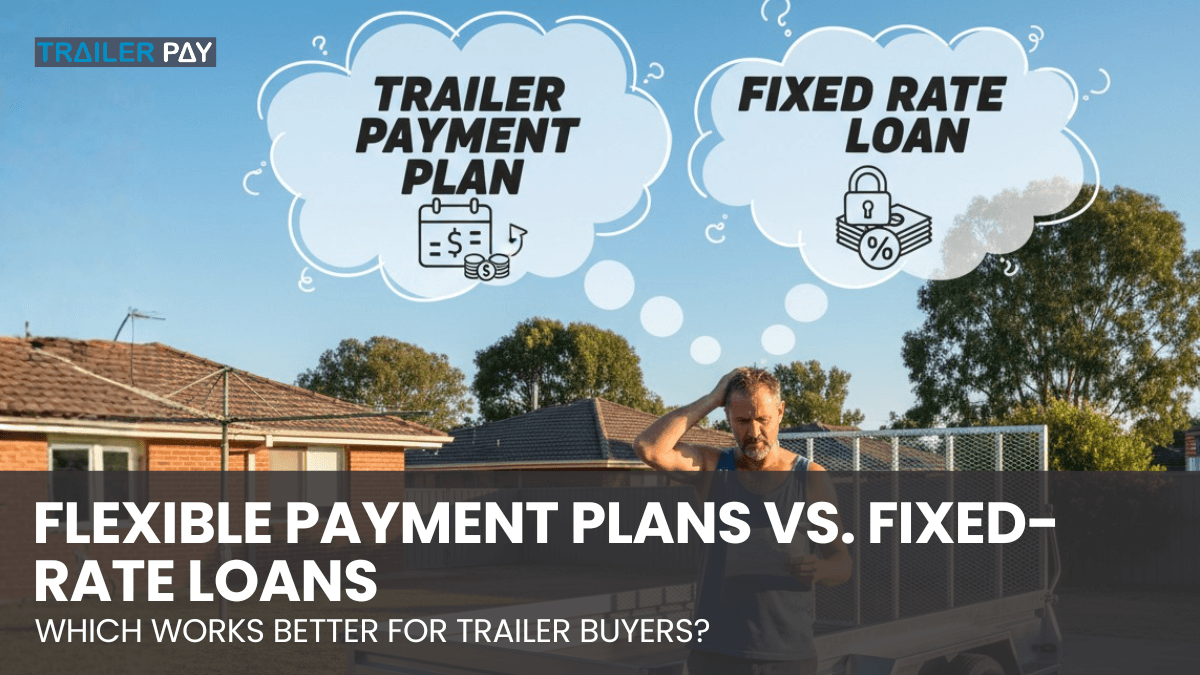
Flexible Payment Plans vs. Fixed-Rate Loans: Which Works Better for Trailer Buyers?
Introduction
Choosing the right financing option for your trailer purchase can significantly impact your budget and long-term financial health. Australian trailer buyers today face a crucial decision between flexible payment plans and traditional fixed-rate loans, each offering distinct advantages depending on individual circumstances. Trailer Pay understands this challenge and provides comprehensive payment solutions alongside a wide range of new trailers including box, boat, flatbed, tipper, tradesman, and car trailers. With flexible payment plans available across Australia and digital tools like our loan calculator, we help customers make informed financing decisions that align with their specific needs and budget constraints.
Overview
This comprehensive guide examines the fundamental differences between flexible payment plans and fixed-rate loans for trailer purchases. You'll learn how each financing method works, their respective advantages and limitations, and most importantly, which option might work better for your specific situation. We'll explore payment structures, interest implications, approval processes, and practical considerations to help you choose the most suitable financing approach. Additionally, we'll provide actionable steps for applying either option and explain how Trailer Pay's tools and services can streamline your trailer buying experience.
Key Takeaways
• Flexible payment plans offer variable terms and payment amounts that can adapt to changing financial circumstances
• Fixed-rate loans provide predictable monthly payments with consistent interest rates throughout the loan term
• Your employment type, income stability, and credit history significantly influence which option works better
• Seasonal workers and contractors often benefit more from flexible payment arrangements
• Traditional employees with steady income may prefer the predictability of fixed-rate loans
• Both options require careful consideration of total cost, deposit requirements, and long-term financial impact
Understanding Flexible Payment Plans
What Are Flexible Payment Plans?
Flexible payment plans represent an innovative approach to trailer financing that prioritizes adaptability over rigid payment structures. Unlike traditional loans, these plans allow customers to adjust payment amounts, timing, and sometimes even terms based on their current financial situation. For trailer buyers, this means having the freedom to increase payments when cash flow is strong or reduce them during lean periods without penalty.
Trailer Pay's flexible payment plans are specifically designed for customers who want to own quality trailers without the constraints of traditional financing. These plans accommodate various trailer types including UTE canopies and UTE trays, with terms that can be customized to match your income patterns. The flexibility extends to seasonal workers, contractors, and anyone whose income fluctuates throughout the year.
The structure of flexible plans typically involves an initial deposit followed by variable payments that can be weekly, fortnightly, or monthly. Payment amounts can often be adjusted with advance notice, allowing customers to align their trailer payments with their income cycles. This approach particularly benefits those in seasonal industries or with irregular income streams.
Benefits of Flexible Payment Plans
The primary advantage of flexible payment plans lies in their adaptability to real-world financial situations. Many Australian workers experience income variations due to seasonal work, overtime opportunities, or project-based employment. Flexible plans accommodate these fluctuations by allowing payment adjustments that traditional loans simply cannot match.
Cash flow management becomes significantly easier with flexible arrangements. During high-income periods, customers can make larger payments to reduce the overall balance faster. Conversely, during slower periods, reduced payments help maintain financial stability without defaulting on obligations. This breathing room can be crucial for small business owners who rely on trailers for their operations.
Another significant benefit is the typically streamlined approval process. Flexible payment plans often have less stringent credit requirements compared to traditional bank loans, making them accessible to customers who might struggle with conventional financing. The focus shifts from credit scores to current income capacity and payment history, opening opportunities for more trailer buyers.
Potential Drawbacks
While flexible payment plans offer numerous advantages, they also come with considerations that potential buyers must understand. The total cost of ownership may be higher compared to traditional loans due to different fee structures and interest calculations. Variable payment amounts can also make long-term budgeting more challenging for some customers.
Payment tracking requires more attention with flexible plans since amounts and due dates may vary. Customers need to stay engaged with their payment schedule and communicate changes in advance to avoid misunderstandings. This increased involvement may not suit everyone's preferred payment style.
Interest rates on flexible plans might start higher than traditional loans, though the ability to make larger payments during good income periods can offset this disadvantage. Additionally, the flexibility that makes these plans attractive can also lead to longer payment periods if customers consistently choose minimum payments.
Understanding Fixed-Rate Loans
How Fixed-Rate Loans Work
Fixed-rate loans represent the traditional approach to trailer financing, characterized by predictable monthly payments and consistent interest rates throughout the loan term. Once approved, borrowers know exactly how much they'll pay each month and when the loan will be fully repaid. This predictability forms the foundation of traditional financial planning for major purchases.
The loan structure typically involves a fixed principal amount, predetermined interest rate, and set repayment period ranging from one to seven years. Monthly payments remain constant regardless of economic conditions or changes in market interest rates. This stability makes budgeting straightforward and eliminates surprises in payment amounts.
Banks and traditional lenders usually offer fixed-rate trailer loans with competitive interest rates for qualified borrowers. The approval process involves comprehensive credit checks, income verification, and assessment of debt-to-income ratios. Once approved, the loan terms cannot be modified without refinancing through a separate application process.
Advantages of Fixed-Rate Loans
The most significant advantage of fixed-rate loans is payment predictability. Knowing exactly how much is due each month allows for precise budgeting and financial planning. This consistency is particularly valuable for customers with steady employment and regular income who prefer financial certainty.
Interest rate protection is another key benefit. If market rates increase during the loan term, borrowers continue paying the original rate locked in at approval. This protection can result in substantial savings over time, especially during periods of rising interest rates. The total loan cost is known upfront, eliminating guesswork about final ownership cost.
Traditional lenders often offer competitive interest rates for fixed-rate loans, particularly for borrowers with good credit scores. Lower interest rates translate directly into reduced total costs and monthly payments. Additionally, the established nature of fixed-rate loans means widespread availability and familiar terms that most customers understand easily.
Limitations of Fixed-Rate Loans
The rigidity that provides predictability can also become a disadvantage when financial circumstances change. Fixed monthly payments must be made regardless of income fluctuations, seasonal work patterns, or unexpected financial challenges. Missing payments can result in penalties and negative credit reporting.
Prepayment restrictions or penalties may apply when customers want to pay off loans early. This limitation prevents borrowers from taking advantage of windfalls or improved financial situations to reduce total interest costs. Some lenders charge fees for early repayment, making accelerated payoff less attractive.
Approval requirements for fixed-rate loans are typically more stringent than flexible payment plans. Customers with limited credit history, variable income, or recent financial difficulties may struggle to qualify. The comprehensive approval process can also take longer, potentially delaying trailer purchases.
Comparing Total Costs and Interest
Interest Rate Structures
Interest rate structures differ significantly between flexible payment plans and fixed-rate loans, impacting the total cost of trailer ownership. Fixed-rate loans typically advertise straightforward annual percentage rates (APR) that remain constant throughout the loan term. These rates are often lower for qualified borrowers with excellent credit scores and stable employment history.
Flexible payment plans may use different interest calculation methods, including flat fees, variable rates, or fee-based structures. While initial rates might appear higher, the ability to make larger payments during prosperous periods can reduce total interest paid over time. Understanding these different structures is crucial for accurate cost comparison.
The timing of interest calculations also varies between options. Traditional loans calculate interest on the remaining principal balance, while some flexible plans might use different methodologies. Customers should request detailed explanations of interest calculations to make informed comparisons between financing options.
Long-Term Cost Analysis
Calculating the true cost of each financing option requires considering all fees, interest charges, and payment flexibility benefits. Fixed-rate loans often have lower advertised rates but may include origination fees, processing charges, and prepayment penalties that increase total costs. The predictable payment structure makes calculating total costs straightforward.
Flexible payment plans might have higher effective rates but offer opportunities to reduce total costs through accelerated payments when financially feasible. The ability to adjust payments based on income can lead to lower total costs for customers with variable income streams. However, consistently making minimum payments could result in higher total costs compared to fixed-rate alternatives.
Real-world cost analysis should include scenarios based on your specific financial situation. Consider your income patterns, seasonal variations, and likelihood of making extra payments when comparing options. Tools like Trailer Pay's loan calculator can help model different scenarios to determine which option provides better value for your circumstances.
Employment Type and Income Considerations
Impact of Employment Status
Your employment type significantly influences which financing option works better for trailer purchases. Full-time employees with steady salaries often benefit from fixed-rate loans due to predictable income streams that align well with consistent monthly payments. The stability of traditional employment provides confidence in meeting regular payment obligations.
Self-employed individuals, contractors, and seasonal workers typically find flexible payment plans more suitable for their variable income patterns. The ability to adjust payment amounts based on project completions, seasonal work availability, or business cash flow provides crucial financial flexibility. This adaptability can prevent payment defaults during slower income periods.
Part-time workers or those with multiple income sources may benefit from either option depending on income predictability. If part-time work provides consistent hours and pay, fixed-rate loans might work well. However, if schedules and income vary significantly, flexible plans offer better alignment with irregular earnings.
Seasonal Income Patterns
Many Australian workers experience seasonal income variations that significantly impact their ability to maintain consistent loan payments. Agricultural workers, tourism industry employees, and construction workers often have peak earning periods followed by slower seasons. Flexible payment plans accommodate these patterns by allowing higher payments during peak seasons and reduced payments during off-seasons.
Traditional trades workers who experience weather-related work interruptions can benefit from payment flexibility that fixed-rate loans cannot provide. The ability to adjust payments based on work availability prevents financial stress during periods when weather conditions limit earning opportunities.
Business owners who rely on trailers for their operations often experience seasonal demand fluctuations. Flexible payment plans allow them to align trailer payments with business income cycles, improving cash flow management during peak and slow periods. This alignment can be crucial for maintaining business profitability while acquiring necessary equipment.
Credit Score and Approval Requirements
Credit Requirements for Each Option
Fixed-rate loans typically require stronger credit scores and more comprehensive financial documentation for approval. Banks and traditional lenders often set minimum credit score requirements, usually above 650 for competitive rates. Higher credit scores unlock better interest rates and more favorable terms, making fixed-rate loans attractive for borrowers with excellent credit history.
Flexible payment plans often have more lenient credit requirements, focusing on current income capacity rather than historical credit performance. This approach opens opportunities for customers with limited credit history, past financial difficulties, or those rebuilding their credit scores. The emphasis on present ability to pay rather than past payment history can be advantageous for many trailer buyers.
Income verification requirements also differ between options. Fixed-rate loans typically require extensive documentation including tax returns, pay stubs, and employment verification. Flexible payment plans may require less documentation, particularly for customers with consistent recent income history, making the approval process faster and less burdensome.
Approval Timeline Differences
The approval process for fixed-rate loans can take several days to weeks, depending on the lender and complexity of the application. Comprehensive credit checks, income verification, and underwriting processes contribute to longer approval times. However, once approved, funds are typically available quickly for trailer purchases.
Flexible payment plans often feature streamlined approval processes that can provide decisions within hours or days. The reduced documentation requirements and simplified underwriting allow for faster processing times. This speed can be crucial when customers need trailers quickly for business operations or urgent personal needs.
Pre-approval options vary between financing types. Traditional lenders often offer pre-approval for fixed-rate loans, allowing customers to shop for trailers with confidence about their budget limits. Flexible payment plan providers may offer similar pre-qualification services, though the specific terms and processes may differ from traditional pre-approval methods.
Choosing the Right Option for Your Situation
Assessment Criteria
Selecting between flexible payment plans and fixed-rate loans requires honest assessment of your financial situation, income patterns, and personal preferences. Begin by analyzing your income stability over the past two years, identifying patterns of seasonal variation, overtime opportunities, or irregular earnings that might affect your ability to maintain consistent payments.
Consider your risk tolerance and preference for financial predictability. If you value knowing exactly what you'll pay each month and prefer simple budgeting, fixed-rate loans might align better with your personality. Conversely, if you appreciate having options and flexibility to adjust payments based on circumstances, flexible plans could be more suitable.
Evaluate your current debt obligations and overall financial health. If you're already managing multiple fixed payments, adding another predictable payment might work well. However, if your existing obligations are variable or you're seeking more breathing room in your budget, flexible payment arrangements could provide needed relief.
Decision Framework
Create a decision framework that weighs the importance of different factors for your specific situation. Rate the significance of payment predictability, total cost minimization, approval likelihood, and payment flexibility on a scale that reflects your priorities. This framework helps clarify which factors matter most for your trailer purchase decision.
Consider both current circumstances and future expectations when making your choice. If you anticipate income growth, job changes, or significant life events that might affect your financial situation, factor these considerations into your decision. The flexibility to adapt to changing circumstances might outweigh slightly higher costs for some buyers.
Test different scenarios using available tools like loan calculators to model how each option would work with your specific income and expense patterns. Compare monthly payment amounts, total costs, and payment flexibility under various income scenarios to identify which option provides better outcomes for your situation.
Application Process and Next Steps
Getting Started with Your Application
The application process begins with gathering necessary financial documentation regardless of which financing option you choose. Prepare recent pay stubs, tax returns, bank statements, and employment verification to expedite the approval process. Having complete documentation ready demonstrates preparedness and can improve approval chances.
Research your chosen trailer specifications and pricing before beginning the application process. Knowing exactly what type of trailer you need, including size, features, and price range, helps lenders assess your financing needs accurately. This preparation also helps you use loan calculators effectively to estimate payments and terms.
Consider applying for pre-approval or pre-qualification before shopping for specific trailers. This step provides clarity about your budget limits and strengthens your position when negotiating with sellers. Pre-approval also identifies any potential issues early in the process, allowing time to address concerns before finding your ideal trailer.
Working with Trailer Pay
Trailer Pay simplifies the trailer buying process by offering both flexible payment plans and access to loan calculators that help you evaluate different financing scenarios. Our team can help you identify suitable trailers from our wide selection and explain how different payment options align with your specific needs and circumstances.
Use our online tools to explore payment scenarios before making final decisions. The loan calculator allows you to model different payment amounts, terms, and trailer prices to understand how various options affect your budget. This preliminary analysis helps you make informed decisions before committing to specific financing arrangements.
Contact our team to discuss your specific situation and get personalized guidance about financing options. Our experience helping customers across Australia choose appropriate trailers and payment plans can provide valuable insights for your decision-making process. We're committed to helping you find solutions that work for your circumstances and budget.
Frequently Asked Questions
Q: Can I switch from a flexible payment plan to a fixed-rate loan later? A: Switching financing options typically requires paying off the existing arrangement and applying for new financing. The feasibility depends on your financial situation and lender policies at the time of the request.
Q: Which option is better for first-time trailer buyers? A: First-time buyers often benefit from flexible payment plans due to more lenient approval requirements and the ability to adjust payments as they learn about their actual usage and budget needs.
Q: Do flexible payment plans affect my credit score differently than fixed-rate loans? A: Both options can impact credit scores positively through consistent payments or negatively through missed payments. The specific impact depends on payment history rather than the financing type.
Q: Can I make extra payments with both financing options? A: Extra payment policies vary by lender and plan type. Fixed-rate loans may have prepayment restrictions, while flexible plans often encourage additional payments to reduce total costs.
Q: How do seasonal income fluctuations affect approval for each option? A: Fixed-rate loans may be challenging for seasonal workers due to income variability requirements. Flexible payment plans are typically more accommodating of irregular income patterns.
Q: What happens if I miss a payment with each financing type? A: Consequences vary by lender but may include late fees, credit score impacts, and potential repossession. Flexible plans may offer more options for payment arrangement modifications.
Q: Are there tax implications for different financing options? A: Business-related trailer purchases may have tax deductibility regardless of financing type. Consult with tax professionals about specific implications for your situation and jurisdiction.
Q: How do deposit requirements differ between the two options? A: Deposit requirements vary by lender and trailer value. Trailer Pay requires a $200 non-refundable deposit regardless of financing type chosen for the trailer purchase.
Q: Can I get pre-approved for both financing types simultaneously? A: Yes, seeking pre-approval for multiple financing options allows you to compare terms and choose the best option for your specific circumstances.
Q: Which option provides faster access to my trailer? A: Flexible payment plans often have shorter approval times, potentially providing faster access to your chosen trailer compared to traditional fixed-rate loan processing times.
Sources
• Australian Securities and Investments Commission (ASIC) - Consumer Credit Information
• Reserve Bank of Australia - Interest Rates and Credit Information
• Australian Competition and Consumer Commission - Consumer Rights
Explore Flexible Payment Plans with Trailer Pay
Ready to determine which financing option works best for your trailer purchase? Start exploring your payment options today and take the first step toward owning the perfect trailer for your needs.