Trailer Payment Plans for Regional and Rural Australians: Overcoming Common Financing Hurdles
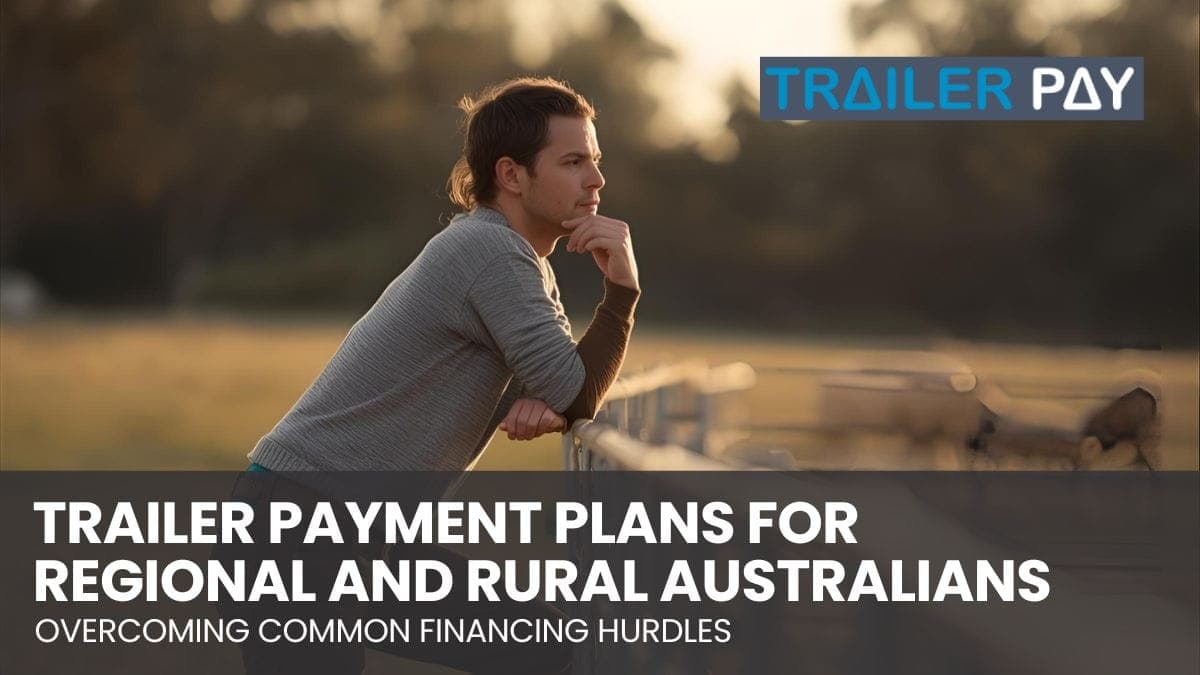
Regional and rural Australians face unique challenges when it comes to accessing trailer financing, from limited local dealer networks to concerns about delivery logistics and payment plan availability. Whether you're a farmer needing a robust tipper trailer for your agricultural operations, a tradesperson requiring a reliable work trailer, or a family seeking a boat trailer for weekend adventures, securing appropriate financing shouldn't be complicated by your postcode.
Trailer Pay understands these regional challenges and offers Australia-wide service with flexible payment plans specifically designed to overcome the barriers that rural customers often encounter. With our comprehensive range of new trailers including box trailers, flatbeds, tippers, tradesman trailers, and boat trailers, plus UTE canopies and trays, we've streamlined the financing process to serve customers across Australia's vast regional landscape.
Overview
This comprehensive guide addresses the specific financing challenges faced by regional and rural Australians and provides practical solutions for securing trailer finance regardless of location. You'll discover how modern payment plan services work across Australia, learn about overcoming common approval hurdles, and understand the delivery and support options available for country customers. We'll also explore the documentation requirements, timing considerations, and strategic approaches that can improve your chances of securing favorable trailer financing terms.
Key Takeaways
• Location-Independent Financing: Modern trailer payment plans are available Australia-wide, eliminating geographical barriers to trailer ownership
• Flexible Documentation: Alternative income verification methods accommodate seasonal and agricultural employment patterns common in rural areas
• Delivery Solutions: Nationwide delivery networks ensure trailers reach regional customers efficiently
• Digital Application Process: Online tools and calculators simplify the financing process for remote customers
• Specialized Support: Dedicated customer service understands regional business needs and seasonal requirements
• Multiple Trailer Options: Wide selection includes agricultural, commercial, and recreational trailers suitable for rural applications
Understanding Regional Financing Challenges
Geographic Limitations and Access Issues
Regional and rural Australians have traditionally faced significant barriers when seeking trailer financing, primarily due to the concentration of financial services in major metropolitan areas. Many conventional lenders require in-person visits, local guarantors, or proximity to branch networks that simply don't exist in remote locations. These geographic limitations have historically forced rural customers to travel hundreds of kilometers or settle for suboptimal financing arrangements.
The traditional dealer network model also creates challenges, with limited local inventory and fewer competitive pricing options. Rural customers often find themselves constrained by whatever financing arrangements their nearest dealer can offer, without the benefit of shopping around for better terms or more suitable payment structures.
Modern trailer financing services have evolved to address these geographic barriers through digital platforms and Australia-wide service networks. Payment plans for trailers now operate independently of location, utilizing online application processes, digital documentation submission, and remote verification systems that eliminate the need for physical presence.
Income Verification in Agricultural and Seasonal Employment
Rural employment patterns often don't align with traditional financing requirements. Seasonal agricultural work, irregular cash flows from farming operations, and self-employment scenarios common in regional areas can complicate standard income verification processes. Many rural Australians experience significant seasonal variations in income, with harvest periods generating substantial revenue followed by leaner months.
Traditional lenders may struggle to assess applications from customers whose income doesn't follow typical salary patterns. Bank statements might show dramatic fluctuations that appear risky to automated assessment systems, even when the customer has a strong long-term financial position and proven ability to service debt.
Understanding trailer loan terms becomes crucial for rural customers, as flexible payment structures can be designed to accommodate seasonal income patterns. Some financing options allow for varied payment schedules or seasonal adjustments that align with agricultural cycles.
Limited Local Financial Infrastructure
Regional areas often lack the financial infrastructure that metropolitan customers take for granted. Fewer bank branches, limited access to financial advisors, and reduced competition among lenders can result in higher costs and fewer options for rural customers. This infrastructure gap can make it difficult to comparison shop for financing or access specialized advice about trailer purchases.
The absence of local expertise in trailer financing means rural customers may not be aware of all available options or may receive generic advice that doesn't account for their specific regional needs. This can lead to suboptimal financing decisions or missed opportunities for better terms.
Digital financing platforms have emerged as a solution, providing rural customers with access to the same competitive rates and terms available to metropolitan customers. Online comparison tools and educational resources level the playing field, ensuring geographic location doesn't result in inferior financing options.
Modern Solutions for Rural Trailer Financing
Australia-Wide Digital Platform Access
Contemporary trailer financing has embraced digital transformation to serve customers regardless of location. Online platforms now provide comprehensive trailer browsing, financing calculators, application processing, and customer support without requiring physical visits or local representation. This digital-first approach has revolutionized access for regional customers.
Trailer financing calculators enable rural customers to model different scenarios, comparing payment terms, deposit amounts, and total costs from the comfort of their homes. These tools provide instant feedback on affordability and help customers make informed decisions before committing to applications.
The digitization of documentation submission means rural customers can complete entire financing applications online, uploading required documents through secure portals and receiving approval decisions electronically. This eliminates the delays and costs associated with postal submissions or travel to metropolitan service centers.
Mobile-optimized platforms ensure accessibility even in areas with limited internet infrastructure, while offline capabilities allow customers to complete applications and calculations during periods of connectivity, syncing when service is restored.
Flexible Documentation and Verification Processes
Modern trailer financing providers have developed sophisticated approaches to income verification that accommodate the unique circumstances of rural employment. Rather than relying solely on traditional payslips and employment letters, contemporary assessment processes can incorporate bank statements, tax returns, BAS statements, and other financial documents that better reflect rural income patterns.
Alternative verification methods include seasonal income averaging, where annual income is assessed across multiple years to account for cyclical variations. This approach recognizes that a farmer's income might be concentrated in specific months while still representing solid financial stability.
Asset-based assessment considers rural property holdings, livestock values, and equipment ownership as indicators of financial capacity. This holistic approach to creditworthiness often provides a more accurate picture of a rural customer's ability to service trailer financing than traditional employment verification alone.
Essential documents for trailer finance approval include both standard financial documents and rural-specific items such as commodity price reports, land valuations, and seasonal income projections that help paint a complete picture of the applicant's financial position.
Streamlined Application and Approval Processes
Efficiency becomes paramount for rural customers who may have limited time during busy seasons or restricted access to communication infrastructure. Modern financing platforms have streamlined application processes to minimize complexity while maintaining thorough assessment standards.
Pre-qualification tools allow rural customers to understand their likely approval status before completing full applications, saving time and avoiding unnecessary documentation preparation for unsuitable financing options. These tools provide instant feedback on eligibility based on basic financial information.
Automated decision-making systems can provide rapid approvals for straightforward applications, with more complex rural applications receiving prioritized human review from specialists who understand agricultural and regional business patterns. This hybrid approach balances efficiency with the nuanced assessment required for non-standard income scenarios.
Communication preferences are accommodated through multiple channels including email, SMS, phone support, and online portals, ensuring rural customers can stay informed about application progress regardless of their preferred communication method or infrastructure limitations.

Overcoming Employment and Income Verification Hurdles
Seasonal Income Documentation Strategies
Rural Australians with seasonal employment patterns can strengthen their financing applications through strategic documentation approaches. Rather than submitting only recent bank statements that might reflect off-season periods, applicants should prepare comprehensive income documentation spanning multiple years to demonstrate consistent earning patterns.
Tax returns provide the most credible long-term income picture for seasonal workers, showing annual totals that smooth out monthly variations. Supplementing tax returns with profit and loss statements for business operations helps explain income sources and demonstrates business viability.
For agricultural applicants, commodity contracts, crop insurance documents, and historical yield data can support income projections and demonstrate the reliability of future earnings. These documents help financing providers understand that seasonal variations are predictable business patterns rather than income instability.
Employment type effects on payment plan options explains how different employment structures impact financing availability and terms, providing guidance for rural customers on presenting their employment situation most favorably.
Creating a financial narrative that explains income patterns, seasonal variations, and long-term business viability can help assessment teams understand the applicant's true financial position beyond what raw bank statements might suggest.
Alternative Income Verification Methods
Rural customers often benefit from alternative verification approaches that recognize the diversity of regional income sources. Rather than traditional employment verification, rural applicants might demonstrate income through business registration documents, ABN details, and client testimonials for service-based rural businesses.
Livestock and crop valuations can support income projections, particularly for applicants who may need trailers for agricultural operations. Professional valuations or recent sale documentation help establish asset-based income capacity and business viability.
Partnership with rural financial advisors or accountants can provide third-party verification of income patterns and business viability. Professional endorsements from qualified advisors who understand rural business operations carry significant weight in assessment processes.
Bank statements spanning multiple years, rather than just recent months, provide better insight into seasonal patterns and overall financial management. Rural customers should prepare statements that cover full seasonal cycles to demonstrate income consistency over time.
Building Creditworthiness in Rural Areas
Rural customers may have different credit profiles than metropolitan customers, often with fewer credit accounts but stronger asset positions. Building creditworthiness in rural areas requires understanding how to leverage rural-specific financial strengths while addressing potential gaps in traditional credit metrics.
Utility payment histories become particularly important in areas where other credit products may be less available. Consistent payment of electricity, water, phone, and internet bills demonstrates reliability and can substitute for limited credit card or loan histories.
Local business relationships and trade accounts can provide alternative credit references. Rural customers often have established relationships with suppliers, equipment dealers, and service providers who can vouch for payment reliability and business competence.
Asset ownership documentation, including property titles, equipment registrations, and livestock records, demonstrates financial substance that may offset limited traditional credit history. Rural customers often have substantial assets that aren't reflected in standard credit reports.
Navigating Delivery and Logistics Considerations
Australia-Wide Delivery Networks
One of the most significant advantages of modern trailer financing is the availability of Australia-wide delivery networks that ensure rural customers receive the same service quality as metropolitan buyers. Professional transport companies now specialize in trailer delivery across vast distances, with established routes covering even the most remote locations.
Delivery scheduling accommodates rural customers' specific needs, including seasonal availability and access constraints during adverse weather periods. Flexible scheduling ensures trailers arrive when customers can receive them, rather than forcing inconvenient timing that might suit metropolitan delivery schedules.
Transport costs are typically factored into financing arrangements, allowing rural customers to include delivery charges in their payment plans rather than requiring separate upfront payments. This integration simplifies the purchase process and reduces immediate cash flow requirements.
GPS tracking and communication systems keep rural customers informed about delivery progress, providing accurate arrival estimates and allowing for any necessary scheduling adjustments. This transparency reduces uncertainty and helps customers plan for trailer receipt.
Regional Access and Infrastructure Considerations
Rural delivery requires specialized understanding of regional access conditions, from unsealed roads to seasonal accessibility challenges. Professional delivery services have experience with these conditions and plan accordingly to ensure successful trailer delivery regardless of location remoteness.
Infrastructure limitations such as bridge weight restrictions, road width constraints, and turning circle requirements are assessed before delivery to ensure trailers can reach their destination safely. This planning prevents delivery complications that might otherwise result in additional costs or delays.
Alternative delivery arrangements might include delivery to regional hubs or convenient meeting points when direct property delivery isn't feasible. These flexible arrangements ensure customers receive their trailers even when infrastructure limitations prevent door-to-door delivery.
Weather-related delivery delays are common in rural areas and are typically accommodated without penalty to customers. Understanding service providers recognize that rural conditions sometimes require flexibility in delivery timing to ensure safety and success.
Support and Communication During Transit
Rural customers particularly value clear communication during trailer transit, as limited local infrastructure can make problem resolution more challenging. Professional delivery services maintain regular contact with customers, providing updates on progress and any potential delays or complications.
Problem resolution procedures are established for rural deliveries, with clear escalation paths and alternative solutions when standard delivery procedures encounter obstacles. This preparation ensures rural customers aren't disadvantaged when complications arise.
Post-delivery support includes inspection procedures, documentation handover, and immediate issue resolution to ensure customers are completely satisfied before delivery personnel depart. This is particularly important for rural customers who may not have easy access to follow-up support.
Contact information for ongoing support is provided during delivery, ensuring rural customers know how to access assistance if questions or issues arise after the delivery team has departed.

Strategic Timing and Seasonal Considerations
Aligning Purchases with Agricultural Cycles
Rural customers often have specific timing requirements related to agricultural or business cycles that influence both trailer needs and payment capacity. Seasonal trailer buying considerations become crucial for optimizing both purchase timing and financing arrangements.
Pre-harvest financing allows farmers to secure necessary trailers before peak demand periods while potentially accessing better pricing and terms during quieter retail periods. Planning trailer purchases in advance of seasonal needs ensures availability and avoids the premium pricing often associated with last-minute purchases.
Payment plan timing can be structured to align with income cycles, allowing for larger payments during harvest or peak earning periods and reduced payments during leaner months. This flexibility helps maintain cash flow balance while ensuring trailer financing remains manageable.
Equipment replacement cycles in rural areas often follow predictable patterns based on usage intensity and seasonal demands. Understanding these cycles helps rural customers plan trailer purchases strategically, maximizing the utility of new equipment while optimizing financing terms.
Cash Flow Management Strategies
Rural businesses typically experience significant cash flow variations that require careful management around major purchases like trailers. Strategic financing approaches can help smooth these variations while ensuring necessary equipment is available when needed.
Deposit timing can be aligned with strong cash flow periods, reducing the financial impact during tighter months. Some financing arrangements allow for varying deposit structures or staged payments that accommodate irregular income patterns.
Emergency reserves become particularly important for rural customers, who may face unexpected expenses related to weather, market conditions, or equipment failures. Maintaining adequate reserves while servicing trailer finance requires careful cash flow planning and realistic payment structuring.
Business interruption planning considers potential impacts on trailer financing obligations during difficult periods such as drought, flood, or market downturns. Understanding options for payment deferrals or restructuring provides peace of mind for rural customers.
Market Timing and Inventory Considerations
Rural customers benefit from understanding seasonal patterns in trailer availability and pricing. Comparing trailer loan options effectively includes timing considerations that can impact both purchase price and financing terms.
Off-season purchases often provide access to better inventory selection and potentially more favorable pricing, as dealers and financiers compete for business during slower periods. This timing advantage can offset some of the logistical challenges associated with rural delivery.
New model releases and inventory cycles affect both availability and pricing of trailers. Rural customers who plan ahead can take advantage of clearance pricing on previous model years or ensure access to new features when they become available.
Market conditions influence financing availability and terms, with rural customers potentially benefiting from competitive periods in the trailer finance market. Understanding these cycles helps optimize both purchase and financing timing.
Building Strong Applications from Regional Locations
Documentation Best Practices for Rural Applicants
Rural customers can strengthen their financing applications through comprehensive documentation that tells their complete financial story. Common trailer finance application blunders to avoid often relate to inadequate documentation preparation, particularly for non-standard income situations.
Financial documentation should span sufficient time periods to demonstrate income consistency and business viability. For seasonal businesses, this typically means providing at least two to three years of records to show recurring patterns rather than isolated results.
Business documentation including licenses, registrations, insurance policies, and client contracts helps establish legitimacy and ongoing viability for rural businesses. This supporting documentation provides context that helps assessors understand the business environment and income sustainability.
Asset documentation including property valuations, equipment inventories, and livestock records demonstrates financial substance that may offset limited traditional credit history. Rural customers often have substantial asset bases that aren't reflected in standard credit reports.
Professional references from accountants, lawyers, or business advisors provide third-party validation of financial position and business competence. These professional endorsements carry particular weight for rural applications where other verification methods may be limited.
Presenting Rural Business Advantages
Rural businesses often have unique advantages that should be highlighted in financing applications. Established customer bases in regional areas can provide more stable, long-term relationships than metropolitan equivalents, reducing business risk and supporting income predictability.
Lower operating costs in rural areas, including reduced rent, labor costs, and overheads, can result in stronger profit margins than urban equivalents. This cost advantage should be clearly demonstrated to show how rural location contributes to business viability.
Asset ownership rates are typically higher in rural areas, with customers more likely to own property, equipment, and other substantial assets. These assets provide security and demonstrate financial responsibility that supports financing applications.
Community connections and local reputation are significant business assets in rural areas, providing customer retention and word-of-mouth marketing advantages that support long-term business viability. These qualitative factors can be important differentiators in financing assessments.
Addressing Potential Concerns Proactively
Rural applications may face assessment concerns about market size, economic diversification, and geographic risk factors. Addressing these concerns proactively in application documentation helps assessors understand the full picture of rural business advantages.
Market analysis demonstrating stable or growing demand for rural services helps counter perceptions about limited market size. Data about population trends, agricultural activity, and regional economic development supports arguments about market viability.
Diversification strategies showing multiple income streams or business activities demonstrate reduced reliance on single economic factors. Rural businesses often have more diverse activities than urban equivalents, providing natural risk mitigation.
Risk mitigation plans addressing potential challenges such as weather impacts, seasonal variations, or infrastructure limitations show professional business management and forward thinking that supports creditworthiness assessments.
Technology Solutions for Remote Access
Digital Platform Capabilities and Mobile Access
Modern trailer financing platforms have been designed with rural access limitations in mind, providing robust functionality even with limited internet infrastructure. Mobile-optimized interfaces ensure full functionality through smartphone access, recognizing that mobile internet is often the primary connectivity option in remote areas.
Offline functionality allows customers to complete applications, use calculators, and review documentation during periods of connectivity, automatically syncing when internet access is restored. This capability ensures rural customers aren't disadvantaged by intermittent connectivity.
Progressive web application technology provides app-like functionality through standard web browsers, eliminating the need for specialized app downloads while providing responsive, fast-loading interfaces optimized for rural internet conditions.
Document upload systems accommodate large file sizes while providing compression options for slower internet connections. Multiple upload methods ensure customers can submit required documentation regardless of their internet infrastructure quality.
Communication and Support Systems
Multi-channel communication systems provide rural customers with various ways to access support and stay informed about their applications. Phone support remains particularly important for rural customers who may prefer voice communication or need immediate assistance.
Email systems provide detailed written communication with document attachment capabilities, allowing for comprehensive information exchange even when real-time communication isn't possible. Automated email updates keep customers informed about application progress.
SMS notification systems provide instant updates about critical application milestones, approvals, and delivery scheduling. These notifications work even with basic mobile phone services and provide immediate information access.
Online portal systems provide secure access to application status, documentation requirements, payment information, and support resources. These portals remain accessible 24/7, accommodating rural customers' varied schedules and time zone differences.
Educational Resources and Self-Service Tools
Comprehensive online educational resources help rural customers understand financing options, application requirements, and trailer selection without requiring direct consultation. Trailer financing guides provide detailed information accessible anytime.
Interactive tools including financing calculators, comparison matrices, and decision guides help customers make informed choices independently. These tools are particularly valuable for rural customers who may not have easy access to face-to-face consultation.
Video tutorials and webinars provide visual instruction on application processes, trailer selection, and financing concepts. These resources can be accessed on-demand, accommodating rural customers' scheduling constraints and learning preferences.
FAQ databases address common rural-specific questions about delivery, support, and special circumstances. These searchable resources provide instant answers to routine questions without requiring customer service contact.
Financial Planning for Rural Trailer Ownership
Total Cost of Ownership Considerations
Rural trailer ownership involves unique cost considerations that differ from metropolitan usage patterns. Higher annual mileage, more challenging operating conditions, and limited service infrastructure can impact both maintenance costs and trailer longevity, affecting total ownership costs.
Maintenance planning becomes crucial in rural areas where service providers may be distant and parts availability limited. Building maintenance reserves and understanding warranty coverage helps ensure ongoing trailer reliability without unexpected financial impacts.
Insurance considerations for rural areas may include coverage for specific risks such as fire, flood, or theft that might be more prevalent in rural locations. Understanding insurance requirements and costs helps complete financial planning for trailer ownership.
Registration and compliance costs vary by state and usage type, with rural customers potentially facing different requirements for commercial versus recreational trailer use. Planning for these ongoing costs ensures budget adequacy throughout the financing period.
Business Integration and Tax Considerations
Rural customers frequently use trailers for business purposes, creating opportunities for tax deductions and business expense treatment. Understanding tax implications can significantly impact the net cost of trailer ownership and influence financing decisions.
Depreciation schedules for business trailers can provide ongoing tax benefits that improve the overall financial impact of trailer purchases. Professional tax advice helps optimize these benefits while ensuring compliance with Australian taxation requirements.
GST considerations for business trailer purchases may allow for input tax credits that reduce the effective purchase price. Understanding GST implications helps accurate cost calculation and cash flow planning.
Business loan interest deductibility can make trailer financing more attractive than outright purchase for business users. These tax advantages should be factored into financing versus cash purchase decisions.
Future Flexibility and Growth Planning
Rural businesses often experience growth or changing needs that may require different trailer configurations or additional units. Planning for future flexibility helps ensure initial financing decisions support long-term business development.
Upgrade options within financing programs allow customers to trade up to larger or more specialized trailers as needs evolve. Understanding these options provides flexibility for growing businesses without requiring complete financing rearrangement.
Additional unit financing may be easier to obtain when existing trailer financing has been successfully managed. Building a positive financing history through initial trailer purchases supports future expansion opportunities.
Resale value considerations help ensure trailers retain value throughout the financing period, supporting potential early payoff or upgrade decisions. Understanding factors that affect rural trailer resale values helps optimize purchase decisions.
Frequently Asked Questions
Q: Can rural customers access the same trailer financing terms as metropolitan customers? A: Yes, modern trailer financing platforms provide identical terms and conditions regardless of location. Geographic location doesn't affect interest rates, payment options, or approval criteria when using Australia-wide financing services.
Q: How do seasonal income variations affect trailer finance approval for rural customers? A: Contemporary assessment processes accommodate seasonal income by evaluating annual earning patterns rather than monthly variations. Providing multi-year tax returns and explaining seasonal business cycles helps assessors understand income reliability.
Q: What documentation do rural customers need for trailer financing applications? A: Rural customers typically need tax returns, bank statements, business registration details, and asset documentation. Essential documentation requirements provide complete lists for different customer situations.
Q: Are there delivery charges for trailers sent to regional and rural areas? A: Delivery costs vary by location but can typically be included in financing arrangements rather than requiring upfront payment. Australia-wide delivery networks serve remote locations professionally and reliably.
Q: How long does rural trailer financing approval typically take? A: Approval times for rural applications are generally similar to metropolitan applications, typically 24-48 hours for standard applications. Complex rural business applications may require additional review but receive priority processing.
Q: Can farmers include trailer financing in their business tax planning? A: Yes, business trailer purchases often qualify for depreciation deductions, GST input credits, and interest deductibility. Professional tax advice helps optimize these benefits for rural business customers.
Q: What happens if seasonal conditions affect my ability to make trailer payments? A: Reputable financing providers understand rural challenges and typically offer payment flexibility during difficult periods. Communication with providers during challenging times often results in temporary payment adjustments or deferrals.
Q: Are there specific trailer types best suited for rural and regional applications? A: Rural customers often benefit from robust trailer construction suited to challenging conditions. Box trailers, tippers, and flatbed trailers are popular for agricultural and trade applications, while boat and camper trailers serve recreational needs.
Q: Can I use mobile internet to complete trailer financing applications? A: Yes, modern financing platforms are optimized for mobile access and can function with basic internet connections. Offline capabilities allow application completion even with intermittent connectivity.
Q: How do I compare trailer financing options from rural locations? A: Online comparison tools and effective comparison guides help rural customers evaluate options independently. Digital platforms provide access to comprehensive information and competitive analysis tools.
Sources
- Australian Bureau of Statistics - Regional Population and Economic Data
- Reserve Bank of Australia - Rural Finance Guidelines
- Australian Competition and Consumer Commission - Consumer Rights Information
- Department of Infrastructure, Transport, Regional Development and Communications - Transport Guidelines
- Australian Securities and Investments Commission - Finance Industry Standards
- Rural Financial Counselling Service - Agricultural Finance Resources
Conclusion
Rural and regional Australians no longer need to accept limited financing options or higher costs due to geographic location. Modern trailer financing platforms have eliminated traditional barriers through digital accessibility, flexible assessment processes, and Australia-wide service networks that provide equal access regardless of postcode.
The key to successful rural trailer financing lies in understanding available options, preparing comprehensive applications that highlight rural business advantages, and working with providers who understand regional customer needs. From seasonal income accommodation to specialized delivery services, contemporary financing solutions address the unique requirements of rural customers while providing competitive terms and professional service.
Whether you need a robust tipper trailer for agricultural operations, a reliable tradesman trailer for regional services, or a recreational trailer for family adventures, flexible payment plans make trailer ownership achievable for rural Australians. The combination of digital convenience, professional service, and nationwide delivery ensures rural customers receive the same quality experience as their metropolitan counterparts.
Ready to explore trailer financing options designed for rural Australians? Visit our online application portal to discover flexible payment plans and competitive terms available nationwide, or contact our team to discuss your specific regional requirements.