
Why Your Trailer's Purpose Matters When Choosing a Finance Plan
Introduction
When purchasing a trailer in Australia, understanding how your intended use affects financing options can save you thousands of dollars and ensure you select the most suitable payment plan. Whether you're a tradesperson needing a work trailer, a family planning weekend adventures, or a business expanding your fleet, your trailer's purpose directly influences loan terms, interest rates, tax benefits, and eligibility requirements.
Trailer Pay recognises that every customer has unique needs, which is why we offer flexible payment plans tailored to different trailer uses and customer circumstances. Our comprehensive range includes box trailers, boat trailers, flatbed trailers, tipper trailers, tradesman trailers, and car trailers, each serving specific purposes that impact financing decisions.
For customers unsure about their financing options, our guide on how trailer payment plans work provides essential background information, while those ready to explore specific options can explore affordable payment plans with Trailer Pay.
Overview
This comprehensive guide examines how trailer purpose affects financing choices, covering commercial versus personal use, tax implications, loan structures, and practical strategies for securing the best payment plan. You'll learn about specific financing considerations for different trailer types, understand regulatory requirements, and discover how to leverage Trailer Pay's tools and expertise to make informed decisions.
Key Takeaways
• Commercial trailer use often qualifies for business financing with tax advantages and different loan terms
• Personal use trailers typically require consumer loans with specific protections and limitations
• Your employment type and business structure significantly impact available financing options
• Different trailer types have varying depreciation rates that affect loan-to-value ratios
• Seasonal use patterns can influence payment plan structures and timing
• Documentation requirements vary significantly between commercial and personal trailer financing
Understanding Commercial vs Personal Trailer Use
The distinction between commercial and personal trailer use forms the foundation of financing decisions. This classification affects everything from interest rates to tax deductibility, making it crucial to accurately categorise your intended use before exploring financing options.
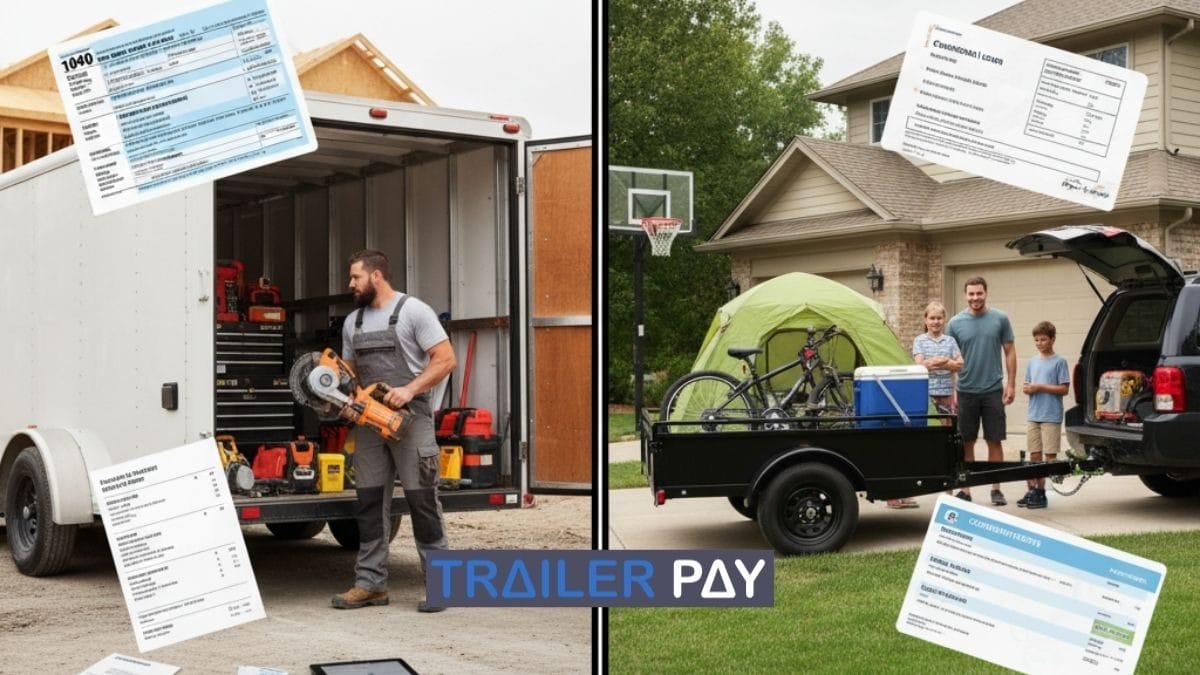
Commercial trailer use encompasses any situation where the trailer generates income, supports business operations, or forms part of a commercial enterprise. This includes tradespeople using trailers for tools and equipment, landscaping businesses transporting materials, catering operations moving supplies, or rental companies offering trailer services. Even if you're a sole trader or contractor, using a trailer for work purposes typically qualifies as commercial use.
Personal use covers recreational activities, hobby pursuits, and domestic applications. Weekend camping trips, boat transportation to local lakes, moving household items, or occasional DIY projects represent personal use scenarios. The key factor is that the trailer doesn't generate income or support business activities.
The classification isn't always straightforward. Some customers use trailers for both purposes, such as contractors who occasionally use work trailers for personal projects. In these mixed-use situations, the primary purpose typically determines the financing category, though some lenders offer flexible arrangements.
Understanding how your employment type affects your payment plan options becomes crucial when determining which financing category applies to your situation.
Tax Implications of Trailer Purpose
Commercial trailer financing often provides significant tax advantages that can substantially reduce the total cost of ownership. Business owners can typically claim depreciation deductions, financing interest as a business expense, and in some cases, immediate asset write-offs under Australian tax provisions.
The instant asset write-off scheme, when available, allows eligible businesses to immediately deduct the full cost of trailers under certain thresholds. This can provide substantial cash flow benefits and reduce the effective cost of financing. However, these benefits only apply to genuine business use, and the Australian Taxation Office requires proper documentation and justification.
Personal trailer financing doesn't offer these tax benefits, but it also comes with consumer protections under Australian Consumer Law. These protections include cooling-off periods, disclosure requirements, and dispute resolution mechanisms that don't typically apply to commercial financing.
Understanding these tax implications helps inform financing decisions. A tradesperson might benefit from commercial financing despite slightly higher interest rates due to tax deductibility, while a family purchasing a camping trailer would focus on consumer loan features and protections.
Financing Options by Trailer Type
Different trailer types present unique financing considerations based on their typical use, depreciation patterns, and market demand. Understanding these factors helps secure appropriate financing terms and avoid common pitfalls.
Tradesman and Work Trailers
Tradesman trailers typically qualify for commercial financing due to their clear business purpose. These trailers often retain value well due to steady demand from the trades industry, making them attractive to lenders. Financing terms may extend longer due to their commercial use, and payments can often be structured around business cash flow patterns.
The robust construction and specialised features of tradesman trailers can command higher loan-to-value ratios, as lenders recognise their essential role in business operations. Many commercial lenders also appreciate the predictable income streams associated with established trades businesses, potentially leading to more favourable terms.
Seasonal considerations affect tradesman trailer financing, particularly for outdoor trades like landscaping or construction. Our guide on seasonal trailer buying and how timing can impact your payment plan explores these considerations in detail.
Recreational and Personal Trailers
Boat trailers, camping trailers, and general-purpose recreational trailers typically require personal financing. These trailers often depreciate faster than commercial equivalents, which can affect loan terms and deposit requirements. However, the large recreational vehicle market in Australia ensures good lender familiarity with these assets.
Recreational trailer financing often emphasises affordability and consumer protection features. Payment plans may include options for seasonal payments, reflecting the typical usage patterns of recreational vehicles. Some lenders offer specialised recreational vehicle loans with features like payment holidays during off-seasons.
The financing approach for recreational trailers should consider total ownership costs, including registration, insurance, and storage. These ongoing expenses can impact affordability assessments and influence appropriate loan terms.
For customers interested in camping and recreational trailers, our comprehensive guide on how to finance your camper trailer provides specific insights for recreational vehicle financing.
Multi-Purpose and Utility Trailers
Box trailers, flatbed trailers, and car trailers often blur the lines between commercial and personal use. These versatile trailers might serve business purposes during weekdays and family needs on weekends. This flexibility can complicate financing decisions but also provides opportunities for creative financing solutions.
Lenders increasingly recognise the multi-purpose nature of these trailers and may offer hybrid financing products that accommodate mixed use. The key is honest disclosure of intended use and selecting financing that aligns with the primary purpose while allowing flexibility for secondary uses.
For those considering UTE accessories alongside trailers, our information on payment plans for UTE trays, canopies, and trailers explains how these purchases can be coordinated.
Employment Type and Financing Eligibility
Your employment situation significantly influences available financing options and terms. Different employment types present varying risk profiles to lenders, affecting everything from interest rates to documentation requirements.

Traditional Employees
Traditional employees with steady wages often find the easiest path to trailer financing. Regular payslips, tax returns, and employment letters provide clear income verification that lenders prefer. These customers typically qualify for standard consumer loans with competitive rates and terms.
The stability of employment affects loan terms, with permanent employees often qualifying for longer repayment periods and lower deposits. Lenders view regular income as reducing default risk, which translates to more favourable financing conditions.
However, traditional employees purchasing trailers for side businesses or contracting work need to carefully consider the financing structure. Using personal loans for business purposes can create complications, particularly regarding tax deductibility and asset protection.
Self-Employed and Contractors
Self-employed individuals and contractors face more complex financing requirements but often have access to commercial financing options that traditional employees don't. The variable income nature of self-employment requires more comprehensive documentation, including tax returns, business activity statements, and sometimes profit and loss statements.
Contractors using trailers for work purposes typically benefit from commercial financing structures that recognise the business use. These arrangements often provide better tax outcomes and can accommodate irregular income patterns through flexible payment structures.
The key for self-employed customers is maintaining good financial records and building relationships with lenders who understand contractor business models. Some lenders specialise in contractor financing and offer products specifically designed for these customers.
Business Entities and Companies
Companies and other business entities often access the most favourable commercial financing terms, particularly for fleet purchases or multiple trailers. Business entities can leverage company financials, asset bases, and established credit histories to secure competitive rates and terms.
Business financing often includes features unavailable to individual borrowers, such as fleet management services, bulk purchase discounts, and customised payment schedules aligned with business cash flows. These additional services can provide significant value beyond the basic financing.
However, business financing also involves more complex documentation and may require directors' guarantees or security beyond the trailer itself. Understanding these requirements helps businesses prepare appropriately and negotiate effectively.
Loan Structure Considerations
The structure of trailer financing varies significantly based on the trailer's purpose and the borrower's circumstances. Understanding different loan structures helps select the most appropriate option for specific situations.
Chattel Mortgages for Commercial Use
Chattel mortgages represent the most common commercial trailer financing structure in Australia. These arrangements provide tax benefits while allowing the borrower to claim ownership for depreciation purposes. The trailer serves as security, and the borrower typically pays a balloon payment or refinances at the term's end.
Chattel mortgages often provide lower effective rates when tax benefits are considered. Businesses can claim depreciation and interest deductions while maintaining full operational control of the trailer. This structure suits businesses with stable cash flows and clear business use for the trailer.
The balloon payment structure requires careful planning, as businesses must either refinance or pay the balloon at term end. However, this structure can provide lower monthly payments during the loan term, improving cash flow for growing businesses.
Consumer Loans for Personal Use
Personal trailer purchases typically use consumer loans, either secured by the trailer or unsecured based on the borrower's creditworthiness. These loans provide simplicity and consumer protections but don't offer the tax benefits available to business borrowers.
Consumer loans often feature fixed interest rates and regular payment schedules that suit family budgeting. The regulated nature of consumer lending provides protections including cooling-off periods and hardship provisions that can benefit personal borrowers.
Secured consumer loans using the trailer as collateral typically offer lower interest rates than unsecured alternatives. However, this means the lender can repossess the trailer if payments aren't maintained, making regular payment capability crucial.
Lease Arrangements
Operating leases and finance leases provide alternatives to traditional financing, particularly for businesses that prefer not to own assets outright. These arrangements can offer tax advantages and improved cash flow but require careful evaluation of total costs.
Operating leases typically include maintenance and may allow easy upgrades to newer trailers. This suits businesses that prefer predictable costs and want to avoid depreciation risks. However, operating leases don't build equity and may cost more over time.
Finance leases provide many ownership benefits while maintaining lease structure tax advantages. These arrangements suit businesses that want eventual ownership while claiming lease payments as tax deductions during the lease term.
For businesses comparing financing structures, our guide on trailer loans vs personal loans and which is the better option provides detailed comparisons.
Understanding Credit and Application Requirements
Credit history and application requirements vary significantly between commercial and personal trailer financing, affecting approval chances and available terms.
Credit Requirements for Different Purposes
Commercial trailer financing often focuses more on business cash flow and trading history than personal credit scores, though both factors remain important. Lenders want to see that the business can generate sufficient income to service the debt while maintaining operations.
Personal trailer financing places greater emphasis on individual credit history, employment stability, and personal debt-to-income ratios. A strong credit history can significantly improve available terms and reduce required deposits.
For customers concerned about credit history, our guide on trailer payment plans even with bad credit explores options for challenging credit situations.
Application Process Differences
Commercial applications typically require more extensive documentation but may offer more flexible assessment criteria. Business plans, cash flow projections, and industry experience can offset credit concerns in commercial applications.
Personal applications focus on straightforward income verification and affordability assessment. The process is often more streamlined but less flexible regarding individual circumstances.
Understanding what to know before applying for trailer finance helps prepare for either type of application and improves approval chances.
Maximising Financial Benefits
Understanding how to structure trailer financing for maximum benefit requires considering the total cost of ownership and long-term financial impact.

Commercial Tax Strategies
Commercial trailer financing offers multiple tax benefits that can significantly reduce total ownership costs. Depreciation deductions, interest expense claims, and potential instant write-offs under applicable schemes provide substantial savings for eligible businesses.
Timing purchases to maximise tax benefits requires understanding business cash flows and tax year timing. Some businesses benefit from end-of-financial-year purchases to maximise current-year deductions, while others prefer beginning-of-year timing for cash flow reasons.
Professional tax advice becomes valuable for significant trailer purchases, as the strategies can vary based on business structure, income levels, and other factors. The cost of professional advice often provides significant returns through optimised tax outcomes.
Personal Financial Planning
Personal trailer financing requires different financial planning approaches, focusing on affordability, lifestyle benefits, and total ownership costs. Without tax benefits, personal buyers must carefully evaluate the financing costs against the trailer's value to their lifestyle.
Building equity through appropriate loan structures helps personal buyers maximise long-term value. This might mean choosing shorter loan terms with higher payments to build equity faster, or selecting trailers with better resale value prospects.
Insurance and ongoing cost planning becomes crucial for personal buyers who don't have business tax deductions to offset these expenses. Budgeting for registration, insurance, maintenance, and storage helps ensure long-term affordability.
For guidance on optimising financing costs, our article on how to save thousands on interest with smart trailer loan strategies provides practical cost-saving techniques.
Using Digital Tools for Financing Decisions
Modern financing decisions benefit from digital tools that help evaluate different scenarios and understand total costs before committing to specific arrangements.
Loan Calculators and Planning Tools
Online loan calculators help compare different financing scenarios and understand the impact of various terms and rates. These tools allow customers to model different deposit amounts, loan terms, and interest rates to find optimal combinations.
For practical guidance on using these tools effectively, our comprehensive guide on how to use a trailer financing calculator explains how to maximise the benefits of financial planning tools.
Comparing multiple scenarios helps identify the most cost-effective approach. This might reveal that slightly higher monthly payments for shorter terms result in significantly lower total interest costs, or that larger deposits provide disproportionate savings.
Digital Application Processes
Modern financing applications increasingly use digital processes that speed approvals and reduce paperwork. Understanding these processes helps customers prepare appropriately and take advantage of faster approval times.
Digital applications often provide immediate preliminary approvals, allowing customers to shop with confidence and negotiate more effectively. However, final approvals still require documentation verification and may take additional time.
Preparing digital documents in advance speeds the application process significantly. This includes scanning identification, financial documents, and business records into easily accessible formats.
Comparing Loan Options Effectively
With multiple financing options available, comparing them effectively ensures the best choice for specific circumstances and trailer purposes.
Evaluating Total Cost of Ownership
Effective loan comparison requires looking beyond monthly payments to understand total costs including interest, fees, insurance requirements, and opportunity costs. Different loan structures may appear similar initially but show significant differences over the full term.
Commercial financing comparison should include tax benefits in total cost calculations. A loan with higher interest rates might provide better overall value when tax deductibility is considered.
Our detailed guide on how to compare trailer loan options effectively provides step-by-step comparison techniques.
Understanding Loan Terms
Different lenders use varying terms and conditions that can significantly impact the financing experience. Understanding these differences helps identify the most suitable arrangements for specific situations.
Key terms to compare include early payment penalties, refinancing options, hardship provisions, and flexibility for changing circumstances. These terms often matter more than small interest rate differences.
For comprehensive guidance on loan terms, our analysis of understanding trailer loan terms through comprehensive comparison explains critical factors to evaluate.
Documentation and Application Preparation
Proper preparation significantly improves application success rates and can lead to better terms through demonstrating organisation and reliability.
Essential Documentation Requirements
Documentation requirements vary between commercial and personal applications, but thorough preparation always improves outcomes. Commercial applications typically require business financial statements, while personal applications focus on individual income verification.
Our guide on essential documents that you will need for quick trailer finance approval provides comprehensive preparation checklists for different application types.
Organising documents professionally and providing complete information demonstrates reliability to lenders and can influence their assessment of risk and appropriate terms.
Avoiding Common Application Mistakes
Many financing applications face delays or rejections due to common, easily avoided mistakes. Understanding these pitfalls helps ensure smooth application processes and better outcomes.
For detailed guidance on avoiding problems, our article on common trailer finance application blunders to avoid highlights frequent issues and prevention strategies.
Proper preparation and understanding of lender requirements significantly improves approval chances and can lead to more favourable terms through demonstrating professionalism and reliability.
Frequently Asked Questions
Can I use personal financing for a trailer I occasionally use for work?
While possible, using personal financing for business purposes can create complications with tax deductibility and may not provide optimal terms. If work use is significant, commercial financing typically provides better overall outcomes despite potentially higher interest rates due to tax benefits.
How does seasonal business affect trailer financing approval?
Seasonal businesses can access trailer financing, but lenders prefer to see multiple years of trading history demonstrating consistent seasonal patterns. Some lenders offer payment plans aligned with seasonal cash flows, making financing more manageable for seasonal operations.
What documentation do I need for commercial trailer financing?
Commercial financing typically requires business financial statements, tax returns for 2-3 years, business activity statements, bank statements, and sometimes business plans or cash flow projections. Newer businesses may need additional documentation or guarantor arrangements.
Are there benefits to choosing shorter loan terms for trailer financing?
Shorter terms typically provide lower total interest costs and build equity faster but require higher monthly payments. For business use, shorter terms may provide better tax outcomes, while personal buyers benefit from reduced total interest costs despite higher monthly commitments.
How do mixed-use trailers affect financing options?
Mixed-use trailers should be financed based on their primary purpose. If business use predominates, commercial financing typically provides better outcomes. However, honest disclosure of mixed use is important, and some lenders offer products specifically designed for mixed-use scenarios.
What happens if my trailer use changes after financing?
Changing from personal to business use may require refinancing to access tax benefits, while changing from business to personal use might affect tax deductions but typically doesn't require immediate refinancing. Consulting with tax professionals helps navigate these transitions effectively.
Can contractors access the same financing as established businesses?
Contractors can access commercial financing but may face additional documentation requirements or different terms due to income variability. Some lenders specialise in contractor financing and offer products specifically designed for these customers.
How does trailer type affect loan-to-value ratios?
Different trailer types have different depreciation patterns and resale markets, affecting loan-to-value ratios. Commercial trailers often command higher ratios due to steady demand, while specialised recreational trailers might require larger deposits due to limited resale markets.
Should I consider short-term or long-term trailer loans?
The choice depends on your cash flow situation and total cost preferences. Our detailed analysis in short-term vs long-term trailer loans and what's best for you explores the trade-offs and helps determine the optimal approach.
Is trailer financing worth it compared to buying outright?
This depends on your financial situation, opportunity costs, and tax circumstances. Our comprehensive guide on is trailer financing worth it and when to buy outright vs take a loan provides detailed analysis to help make this decision.
Sources
Australian Taxation Office - Business Asset Depreciation https://www.ato.gov.au/business/depreciation-and-capital-expenses-and-allowances/
Australian Competition and Consumer Commission - Consumer Rights https://www.accc.gov.au/consumers/consumer-rights-guarantees
Australian Securities and Investments Commission - Consumer Credit https://asic.gov.au/for-consumers/loans-and-credit/
Take the Next Step Towards Your Ideal Trailer
Understanding how your trailer's purpose affects financing options empowers you to make informed decisions that save money and provide appropriate terms for your situation. Whether you need commercial financing for business operations or personal financing for recreational activities, the right approach maximises value and ensures sustainable payments.
Ready to explore your options? Visit our apply now page to begin your application, or contact our team for personalised guidance on the best financing approach for your specific trailer needs. Our experts understand the nuances of different trailer purposes and can help structure the perfect payment plan for your situation.