Trailer Payment Plans for Small Business Owners: Strategies to Maximize Cash Flow
Small business owners across Australia face a constant challenge: acquiring essential equipment like trailers while maintaining healthy cash flow. Whether you're running a landscaping service, construction company, or retail operation, trailers are often crucial for daily operations, yet the upfront costs can strain your working capital. Understanding how strategic trailer payment plans can transform your business finances is essential for sustainable growth.
Trailer Pay specializes in helping Australian businesses access a wide range of commercial trailers through flexible payment solutions that prioritize cash flow preservation. Our comprehensive selection includes box trailers, flatbed trailers, tipper trailers, and tradesman trailers, all available through payment plans designed specifically for business needs.
Overview
This comprehensive guide explores how small business owners can leverage trailer payment plans to maintain optimal cash flow while acquiring necessary equipment. You'll discover the financial advantages of structured payments, learn to evaluate different financing options, and understand how to integrate trailer acquisitions into your broader business strategy. We'll cover everything from initial planning and application processes to long-term financial management and tax considerations.
Key Takeaways
• Strategic trailer financing preserves working capital for daily operations and unexpected opportunities
• Flexible payment plans allow businesses to match equipment costs with revenue generation
• Understanding different financing structures helps optimize cash flow management
• Proper planning can turn trailer acquisitions into tax-advantaged business investments
• Regular payment plans often cost less than frequent rental arrangements for long-term use
• Business credit building through responsible trailer financing improves future borrowing capacity
Understanding Business Cash Flow and Equipment Financing
The Cash Flow Challenge for Small Businesses
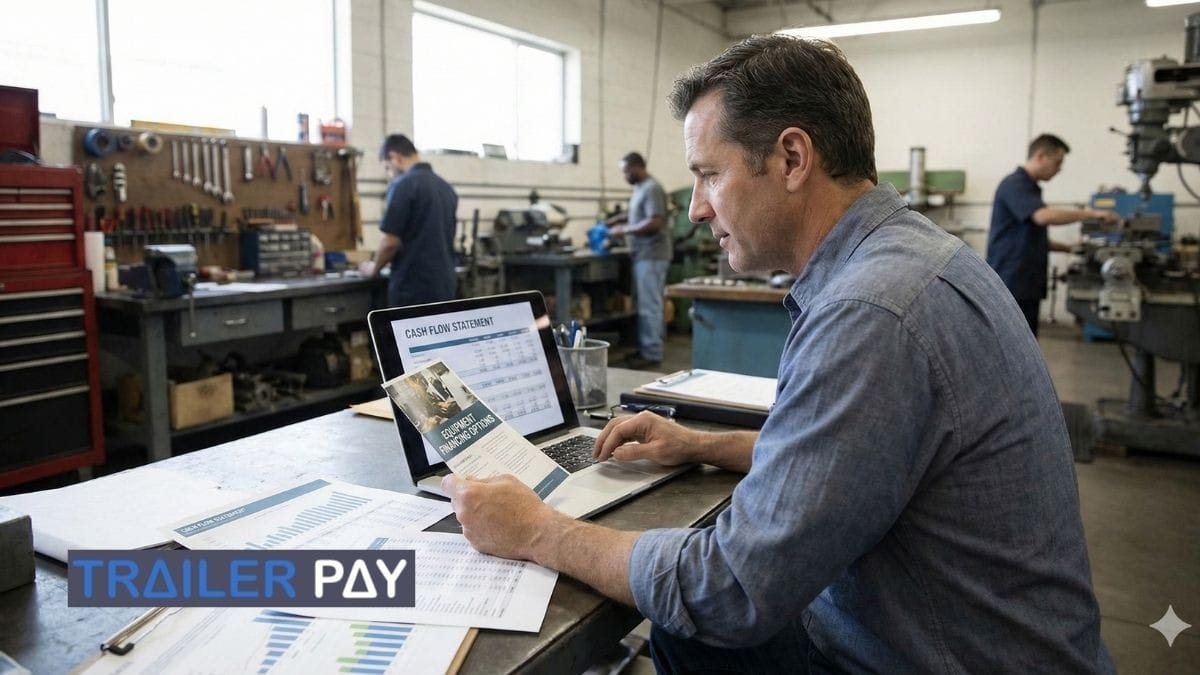
Small businesses operate with inherently tighter cash flow margins than larger corporations. Every dollar tied up in equipment purchases is a dollar unavailable for inventory, payroll, marketing, or unexpected expenses. This reality makes traditional lump-sum equipment purchases particularly challenging, even when the equipment is essential for business operations.
Cash flow management becomes even more critical during seasonal fluctuations, economic uncertainty, or periods of rapid growth. A landscaping business, for example, might generate most of its revenue during spring and summer months but need trailer capacity year-round. Similarly, a construction company might face project-based income cycles that don't align with major equipment purchase requirements.
Traditional financing approaches often fail small businesses because they focus on credit scores and collateral rather than cash flow patterns and business potential. This disconnect creates unnecessary barriers for businesses that would easily afford reasonable monthly payments but struggle with large upfront costs.
Understanding your business's specific cash flow patterns is crucial for making informed financing decisions. Document your monthly income and expense cycles, identify seasonal variations, and calculate how much working capital you need to maintain for operational stability.
How Equipment Financing Transforms Business Operations
Equipment financing fundamentally changes the relationship between cash flow and business capability. Instead of depleting working capital for equipment purchases, businesses can preserve cash while immediately accessing necessary tools. This approach enables more strategic resource allocation and reduces financial stress during critical growth periods.
The immediate benefit of preserved working capital extends beyond simple cash availability. Businesses with healthy cash reserves can negotiate better terms with suppliers, take advantage of bulk purchase discounts, and respond quickly to unexpected opportunities or challenges. This financial flexibility often generates more value than the interest costs associated with equipment financing.
Equipment financing also creates predictable expense structures that simplify business planning and budgeting. Fixed monthly payments eliminate the uncertainty of large, irregular equipment expenses and allow for more accurate profit projections and business planning.
For businesses experiencing growth, equipment financing provides scalability without proportional cash flow impact. As revenue increases, the fixed equipment payments become a smaller percentage of total income, effectively reducing the relative cost of essential equipment over time.
Types of Trailer Payment Plans for Businesses
Traditional Business Loans vs. Equipment-Specific Financing
Traditional business loans provide flexibility in how funds are used but often require extensive documentation, personal guarantees, and may not offer the most competitive rates for equipment purchases. These loans typically work best for businesses with strong credit histories and established relationships with financial institutions.
Equipment-specific financing, by contrast, uses the trailer itself as collateral, often resulting in better interest rates and more favorable terms. The equipment secures the loan, reducing lender risk and potentially eliminating requirements for additional collateral or personal guarantees.
Trailer Pay's flexible payment plans bridge the gap between traditional financing complexity and business cash flow needs. Our streamlined approval process focuses on your business's ability to make consistent payments rather than extensive paperwork and credit requirements.
The key advantage of equipment-specific financing lies in the direct relationship between the financed asset and its revenue-generating potential. Trailers used for business purposes typically pay for themselves through increased efficiency, expanded service capabilities, or direct revenue generation, making the financing decision economically straightforward.
Lease vs. Purchase Financing Options
Leasing arrangements allow businesses to access trailer equipment with lower monthly payments and minimal upfront costs, but don't result in ownership. This option works particularly well for businesses that need current equipment technology, prefer to upgrade regularly, or want to maintain maximum cash flow flexibility.
Purchase financing, while requiring higher monthly payments, builds business equity and provides long-term asset ownership. For businesses planning to use trailers for extended periods, purchase financing typically offers better long-term value and complete control over equipment modifications and usage.
Understanding trailer loan terms becomes crucial when evaluating these options. Consider factors like total cost of ownership, tax implications, equipment utilization rates, and your business's long-term equipment needs.
The decision between leasing and purchasing often depends on your business's specific circumstances, including cash flow priorities, tax situation, equipment usage patterns, and growth plans. Businesses with stable, predictable income often benefit from purchase financing, while those with variable income or rapid growth might prefer leasing flexibility.
Seasonal and Project-Based Payment Structures
Some businesses operate with distinctly seasonal revenue patterns that don't align well with traditional monthly payment structures. Seasonal trailer buying strategies can help optimize cash flow by matching payment schedules with income patterns.
Seasonal payment structures might include higher payments during peak revenue months and reduced payments during slower periods. This approach requires careful planning and documentation of your business's income patterns but can significantly improve cash flow management for seasonal businesses.
Project-based businesses, such as construction companies working on large contracts, might benefit from payment structures that align with project completion and payment schedules. These arrangements require more customization but can provide significant cash flow advantages for businesses with longer project cycles.
The key to successful seasonal or project-based payment structures lies in accurate forecasting and conservative planning. Build in safety margins for unexpected delays, cost overruns, or payment delays from customers to ensure you can meet financing obligations regardless of operational challenges.
Calculating the True Cost of Trailer Financing
Interest Rates and Fee Structures
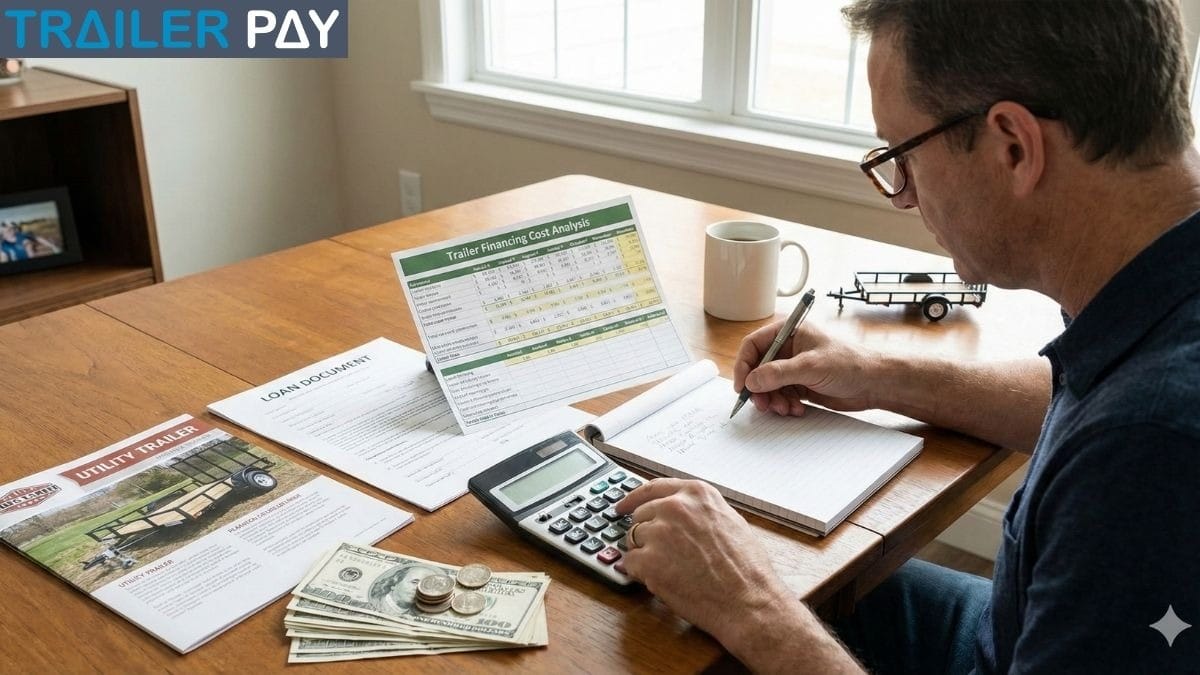
Understanding the complete cost structure of trailer financing requires looking beyond simple interest rates to include all associated fees and charges. Setup fees, documentation charges, early payment penalties, and late payment fees can significantly impact the total cost of financing.
Annual Percentage Rate (APR) provides a more comprehensive measure of financing costs by including both interest rates and mandatory fees in a single percentage. When comparing financing options, always request APR calculations for accurate cost comparisons.
Using a trailer financing calculator helps visualize the total cost impact of different financing terms. These tools allow you to model various scenarios including different loan terms, interest rates, and down payment amounts to find the optimal balance between monthly payments and total cost.
Consider the opportunity cost of your down payment when evaluating financing options. Money used for down payments isn't available for other business investments, marketing efforts, or cash flow management, so the true cost of financing includes the potential return on alternative uses of that capital.
Tax Implications and Deductions
Business trailer purchases often qualify for significant tax advantages that can substantially reduce the effective cost of financing. Section 179 deductions allow businesses to deduct the full purchase price of qualifying equipment in the year of purchase, subject to annual limits and business income requirements.
Depreciation deductions provide ongoing tax benefits for businesses that don't take the full Section 179 deduction. Understanding the depreciation schedule for business trailers helps calculate the after-tax cost of different financing options and payment structures.
Tax benefits of financing a trailer for your business in Australia include GST considerations, asset depreciation schedules, and potential deductions for financing costs. Consulting with a qualified accountant ensures you maximize available tax advantages while maintaining compliance with Australian tax law.
The timing of equipment purchases can significantly impact tax benefits, particularly for businesses operating near Section 179 deduction limits or with variable annual income. Strategic timing of trailer acquisitions can optimize tax advantages while supporting business operations.
Comparing Total Cost of Ownership
Total cost of ownership calculations must include purchase price, financing costs, insurance, maintenance, registration, and eventual disposal costs. These comprehensive calculations often reveal that slightly higher monthly payments can result in lower total costs through better equipment quality or more favorable financing terms.
Factor in the productivity and revenue impact of trailer availability when calculating total cost of ownership. Why financing a work trailer makes more sense than renting becomes clear when comparing long-term ownership costs with ongoing rental expenses and availability limitations.
Consider the impact of equipment downtime on your total cost calculations. Financing newer, more reliable equipment might justify higher monthly payments through reduced maintenance costs and improved operational reliability. These factors become particularly important for businesses where trailer availability directly impacts revenue generation.
Insurance costs vary significantly based on trailer type, usage, and coverage levels. Include comprehensive insurance cost projections in your total cost of ownership calculations, and consider how financing requirements might impact insurance coverage decisions.
Strategic Cash Flow Management with Trailer Financing
Preserving Working Capital for Growth Opportunities
Strategic trailer financing preserves working capital that would otherwise be tied up in equipment purchases, maintaining financial flexibility for unexpected opportunities or operational needs. This preserved capital can fund marketing campaigns, inventory expansion, staff hiring, or other growth initiatives that directly impact revenue generation.
Working capital preservation becomes particularly valuable during economic uncertainty or market volatility. Businesses with adequate cash reserves can weather temporary revenue declines, take advantage of supplier discounts, or pivot operations more quickly in response to changing market conditions.
Flexible payment plans vs. fixed rate loans comparison reveals how different financing structures impact working capital availability. Flexible arrangements might cost slightly more but provide valuable operational advantages during uncertain periods.
The compounding effect of preserved working capital often exceeds the cost of equipment financing. Money available for business investment, particularly in marketing and customer acquisition, typically generates returns that surpass financing costs, making equipment financing a net positive investment.
Matching Payment Schedules to Revenue Cycles
Businesses with predictable revenue cycles benefit significantly from payment schedules that align with income patterns. Seasonal businesses might negotiate higher payments during peak periods and reduced payments during slower months, optimizing cash flow management throughout the year.
Service-based businesses often experience monthly or quarterly revenue cycles based on billing patterns. Aligning equipment payments with these cycles ensures adequate cash availability for operational expenses during revenue collection periods.
Construction and project-based businesses might benefit from payment structures tied to project completion milestones or progress payments from customers. These arrangements require more sophisticated planning but can provide significant cash flow advantages for businesses with longer project cycles.
Effective revenue cycle matching requires accurate historical data and conservative forecasting. Document your business's revenue patterns over multiple years to identify reliable trends and seasonal variations that can inform payment schedule negotiations.
Building Business Credit Through Equipment Financing
Responsible equipment financing creates positive credit history that improves future borrowing capacity and terms. Regular, on-time payments demonstrate business stability and financial management capability to future lenders and suppliers.
Establishing equipment financing relationships with multiple lenders creates a network of potential funding sources for future expansion needs. These relationships often lead to preferential terms and streamlined approval processes for subsequent financing needs.
How employment type affects your payment plan options extends to business type and industry. Different business structures and industries often have access to specialized financing programs with more favorable terms than general business loans.
The credit-building value of equipment financing compounds over time as positive payment history accumulates. Businesses that consistently meet equipment financing obligations often qualify for increased credit limits, reduced interest rates, and more flexible terms on future financing arrangements.
Industry-Specific Trailer Payment Strategies
Construction and Trade Businesses
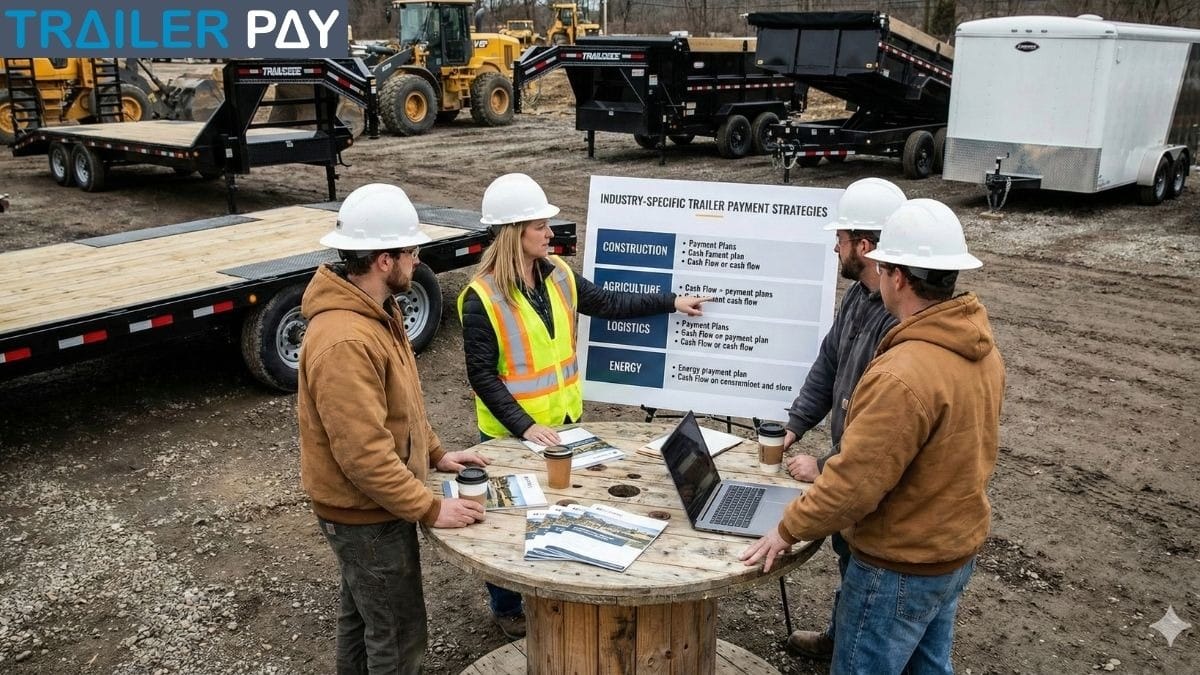
Construction businesses typically require heavy-duty trailers capable of transporting equipment, materials, and debris. These trailers experience significant wear and require financing structures that account for intensive usage and potential equipment depreciation.
Trade businesses often benefit from specialized trailer configurations with built-in storage, tool compartments, or equipment mounting systems. Financing these customized trailers requires lenders who understand the value proposition and revenue impact of specialized equipment configurations.
Project-based payment structures work particularly well for construction businesses because equipment financing payments can be built into project estimates and billing structures. This approach ensures equipment costs are recovered through customer payments rather than absorbed as overhead expenses.
Construction businesses should consider the tax advantages of equipment financing carefully, as the depreciation and deduction opportunities often provide significant value. Why your trailer's purpose matters when choosing a finance plan becomes particularly relevant for businesses using trailers for specialized commercial applications.
Retail and Distribution Operations
Retail and distribution businesses often require multiple trailers for different functions including inventory transport, customer deliveries, and equipment storage. Financing multiple trailers simultaneously might qualify for volume discounts and simplified administration.
These businesses typically have more predictable revenue cycles than construction operations, making traditional monthly payment structures appropriate. However, seasonal retail businesses might benefit from payment schedules that account for holiday sales spikes and slower periods.
Delivery-focused businesses should consider the revenue impact of trailer availability when evaluating financing options. Investing in reliable, well-maintained equipment through financing often costs less than dealing with breakdowns, delays, and customer service issues from older equipment.
The expansion potential of retail and distribution businesses often justifies slightly higher equipment financing costs for the ability to scale operations quickly. Preserved working capital enables inventory expansion, marketing campaigns, and staff hiring that directly support revenue growth.
Service-Based Small Businesses
Service businesses from landscaping to cleaning operations often require trailers for equipment transport and material storage. These businesses typically benefit from smaller, more maneuverable trailers that can access residential and commercial properties easily.
Service businesses often experience seasonal revenue variations that should be factored into payment schedule planning. Landscaping businesses, for example, might generate most revenue during growing seasons but need equipment year-round for maintenance and preparation activities.
The mobility requirements of service businesses make equipment reliability crucial for customer satisfaction and revenue generation. Financing newer, more reliable trailers often provides better value than purchasing older equipment that might require frequent repairs or replacement.
Service businesses should document the direct relationship between trailer capacity and revenue generation when applying for financing. Clear demonstration of how equipment enables increased service capacity or expanded service offerings strengthens financing applications and might qualify for better terms.
Common Financing Mistakes and How to Avoid Them
Over-Borrowing and Under-Planning
One of the most common financing mistakes involves borrowing more than necessary or choosing equipment that exceeds actual business needs. While having excess capacity might seem advantageous, it ties up additional capital and increases monthly payment obligations without proportional revenue benefits.
Under-planning the total cost of ownership leads to cash flow problems when insurance, registration, maintenance, and operational costs exceed expectations. Essential documents for quick trailer finance approval should include comprehensive cost projections beyond the equipment purchase price.
Inadequate consideration of business growth or contraction scenarios can result in financing arrangements that become problematic during operational changes. Build contingency planning into your financing decisions to accommodate potential business evolution.
Failing to shop for competitive financing terms often results in unnecessarily high costs. How to compare trailer loan options effectively includes evaluating multiple lenders, understanding fee structures, and negotiating terms based on your business's specific circumstances.
Ignoring Hidden Costs and Fees
Many financing agreements include fees and charges beyond the basic interest rate that significantly impact total cost. Setup fees, documentation charges, early payment penalties, and late payment fees should be factored into financing cost comparisons.
Insurance requirements vary significantly between lenders and can represent substantial ongoing costs. Some lenders require comprehensive coverage that might exceed your business's normal insurance levels, adding unexpected monthly expenses to equipment financing costs.
Registration, licensing, and compliance costs for commercial trailers often exceed standard vehicle registration fees. Research these requirements thoroughly before finalizing financing arrangements to avoid cash flow surprises after equipment delivery.
Modification and customization restrictions in financing agreements can prevent necessary business adaptations without penalty payments or contract renegotiation. Understand equipment modification rights and restrictions before committing to financing arrangements.
Choosing the Wrong Financing Structure
Selecting inappropriate loan terms creates unnecessary cost or cash flow problems. Short-term vs. long-term trailer loans comparison reveals how different term lengths impact monthly payments, total costs, and business cash flow.
Mismatching financing structures with business income patterns creates cash flow stress during predictable low-revenue periods. Seasonal businesses particularly need financing structures that accommodate revenue variations throughout the year.
Focusing exclusively on monthly payment amounts without considering total cost often results in poor long-term value. While lower monthly payments preserve short-term cash flow, they might significantly increase total financing costs over the loan term.
Failing to consider future equipment needs when structuring current financing can limit growth opportunities or force costly refinancing arrangements. Plan equipment financing as part of broader business strategy rather than isolated transactions.
Application Process and Documentation
Preparing Your Financial Documentation
Lenders require comprehensive financial documentation to evaluate business financing applications. Recent tax returns, profit and loss statements, bank statements, and cash flow projections provide the foundation for financing approval and terms determination.
Business credit reports and personal credit information for business owners impact financing availability and terms. Review credit reports before applying to identify and address any issues that might affect approval or result in less favorable terms.
Common trailer finance application blunders to avoid include incomplete documentation, inconsistent information between documents, and failure to explain unusual financial circumstances or variations.
Documentation should tell a coherent story about your business's financial health, growth trajectory, and ability to meet financing obligations. Organize documents logically and provide explanations for any unusual circumstances or variations in financial performance.
Understanding Approval Criteria
Lenders evaluate multiple factors when reviewing business equipment financing applications including credit history, business cash flow, industry stability, and the specific equipment being financed. Understanding these criteria helps prepare stronger applications.
Debt-to-income ratios and existing credit obligations impact approval decisions and available terms. Calculate your business's total debt obligations and monthly cash flow to understand how additional equipment payments fit within your financial structure.
The relationship between equipment cost and business revenue influences lender confidence in approval decisions. Equipment that directly supports revenue generation receives more favorable consideration than equipment that primarily reduces costs or improves efficiency.
Personal guarantees might be required for small business equipment financing, particularly for newer businesses or those with limited credit history. Understand the implications and alternatives before agreeing to personal guarantee requirements.
Streamlining the Application Process
Organizing documentation systematically and responding promptly to lender requests accelerates approval timelines and demonstrates business professionalism. Create a financing application checklist to ensure all required information is included in initial submissions.
Establishing relationships with equipment financing specialists who understand your industry can significantly improve approval odds and terms. These specialists understand industry-specific challenges and can position applications more effectively.
How to apply for trailer financing through Trailer Pay's streamlined process reduces paperwork and approval timelines while maintaining competitive terms. Our industry specialization allows for more efficient evaluation of trailer financing applications.
Pre-approval for equipment financing provides negotiating advantages when selecting specific trailers and can accelerate delivery timelines. Understanding your financing capacity before shopping for equipment enables more focused decision-making and better vendor negotiations.
Long-Term Financial Management
Monitoring and Adjusting Payment Strategies
Regular review of equipment financing performance relative to business cash flow helps identify opportunities for optimization or necessary adjustments. Monthly cash flow analysis should include equipment payments alongside all other business expenses.
Refinancing opportunities might arise as business credit improves or market interest rates change. Monitor refinancing potential annually to identify cost savings opportunities or improved payment structures.
Early payment strategies can reduce total financing costs when business cash flow allows. However, evaluate the opportunity cost of early payments against alternative uses of capital before committing to accelerated payment schedules.
Equipment utilization tracking helps justify financing decisions and provides data for future equipment planning. Document how financed equipment contributes to revenue generation and operational efficiency to support future financing applications.
Planning for Equipment Upgrades and Expansion
Developing equipment replacement schedules helps plan for future financing needs and ensures operational continuity. Consider equipment lifecycle costs and revenue impact when developing replacement timelines.
Technology advancement in trailer design and functionality might justify equipment upgrades before full depreciation. Factor potential upgrade opportunities into financing term decisions to maintain operational flexibility.
How Trailer Pay's wide selection supports flexible financing enables businesses to plan equipment expansion strategically. Understanding available options helps develop coherent equipment acquisition strategies.
Growth planning should include equipment capacity requirements and financing capacity for expansion. Businesses experiencing rapid growth might benefit from establishing equipment financing relationships before immediate needs arise.
Exit Strategies and Asset Management
Understanding equipment residual value helps plan for loan payoff and equipment disposition decisions. Some financing structures include residual value guarantees or purchase options that impact long-term planning.
Equipment modification and customization decisions impact resale value and financing collateral requirements. Consider the long-term implications of customizations before making irreversible modifications to financed equipment.
Insurance claims and equipment damage procedures should align with financing agreement requirements. Understand claim procedures and replacement requirements to avoid financing complications during equipment problems.
End-of-term options for equipment financing include purchase, refinancing, or equipment return depending on financing structure. Plan for these decisions early in the financing term to ensure optimal outcomes.
Frequently Asked Questions
Q: What credit score do I need for business trailer financing? A: Most business trailer financing requires a credit score of 600 or higher, though requirements vary by lender and loan amount. Trailer Pay evaluates applications holistically, considering business cash flow and equipment purpose alongside credit scores.
Q: Can I finance multiple trailers simultaneously for my business? A: Yes, many lenders offer fleet financing for multiple trailer purchases. This approach often provides volume discounts and simplified administration compared to individual trailer financing arrangements.
Q: How do I determine the right loan term for my business situation? A: Consider your cash flow capacity, total cost tolerance, and equipment usage timeline. Shorter terms mean higher monthly payments but lower total costs, while longer terms preserve cash flow but increase total financing costs.
Q: What happens if my business experiences financial difficulties during the loan term? A: Contact your lender immediately to discuss modification options. Many lenders offer temporary payment reductions, refinancing, or other accommodation for businesses experiencing temporary financial stress.
Q: Are there tax advantages to financing versus purchasing trailers outright? A: Yes, financing can provide tax advantages through depreciation deductions and potential Section 179 deductions. Consult with a qualified accountant to understand specific benefits for your business situation.
Q: Can I modify or customize a financed trailer for my business needs? A: Modification rights vary by financing agreement. Some lenders allow modifications with prior approval, while others restrict changes that might impact equipment value or safety.
Q: What insurance is required for financed business trailers? A: Comprehensive insurance is typically required, including collision, liability, and gap coverage. Specific requirements vary by lender and should be factored into total ownership costs.
Q: How quickly can I get approval for business trailer financing? A: With complete documentation, many applications receive approval within 24-48 hours. Trailer Pay's streamlined process often provides same-day approval decisions for qualified applicants.
Q: What documentation do I need for business trailer financing applications? A: Typical requirements include recent tax returns, financial statements, bank statements, business licenses, and personal identification. Specific requirements vary by lender and loan amount.
Q: Can startups or new businesses qualify for trailer financing? A: Yes, though requirements might be more stringent. New businesses often need personal guarantees and might face higher interest rates or larger down payment requirements.
Sources
- Australian Securities and Investments Commission - Equipment Financing Guidelines
- Reserve Bank of Australia - Small Business Finance Trends
- Australian Taxation Office - Business Equipment Depreciation Rules
- Australian Competition and Consumer Commission - Consumer Credit Protection
- Equipment Finance Australia - Industry Best Practices
Ready to Optimize Your Business Cash Flow with Strategic Trailer Financing?
Transform your business operations while preserving valuable working capital through Trailer Pay's flexible payment solutions. Our experienced team understands the unique challenges facing Australian small businesses and provides financing structures designed to support growth and operational efficiency. Contact us today to discuss your specific business needs and discover how strategic trailer financing can accelerate your success while maintaining optimal cash flow management.