
How to Calculate If You Can Afford a Trailer Payment Plan
Introduction
Purchasing a trailer is a significant decision for any Australian individual or business, and understanding whether you can comfortably afford a payment plan is the first step toward responsible ownership. Whether you need a box trailer for weekend projects, a tradesman trailer for your business, or a boat trailer for family adventures, calculating affordability ensures you make a decision that supports your financial wellbeing rather than straining it.
Trailer Pay offers flexible payment plans that make trailer ownership accessible, but the real question isn't whether you can get approved—it's whether the payments fit comfortably within your budget. This guide walks you through practical methods to assess your financial capacity before committing to a trailer payment plan.
Key Takeaways
- Understanding your monthly income and expenses is essential before committing to any payment plan.
- The 50/30/20 budgeting rule provides a simple framework for allocating income toward needs, wants, and financial goals.
- Your debt-to-income ratio should ideally stay below 30% to maintain financial flexibility.
- Using a trailer financing calculator helps you estimate actual payment amounts before applying.
- Business owners should factor in seasonal income variations when assessing affordability.
Overview
This article explains how to calculate whether you can afford a trailer payment plan by examining your income, existing obligations, and available surplus. You'll learn practical budgeting frameworks, understand how to calculate your debt-to-income ratio, and discover how to use financial tools to make an informed decision about trailer payment plans.
Step 1: Calculate Your Net Monthly Income
Your journey toward trailer ownership begins with understanding exactly how much money you have coming in each month. Net income—your take-home pay after tax, superannuation, and other automatic deductions—represents the actual amount available for expenses and financial commitments.

For employees with consistent salaries, this calculation is straightforward: simply review your payslip or bank statements to identify your regular take-home amount. However, if you're a tradie, contractor, or small business owner with variable income, you'll need to calculate an average across several months. Consider looking at your income over the past 6-12 months to account for seasonal fluctuations, particularly if your work patterns change throughout the year.
Business owners should separate personal income from business revenue. Your affordable trailer payment amount relates to what you personally take home, not gross business turnover. If you operate a business that experiences seasonal peaks and troughs, identifying your lowest-income months helps ensure payments remain manageable year-round—a consideration particularly relevant for regional and rural Australians whose income often follows agricultural or tourism cycles.
Step 2: Apply the 50/30/20 Budgeting Framework
The 50/30/20 rule offers a straightforward method for understanding where your money should go. According to ASIC's MoneySmart guidance, this framework divides your after-tax income into three categories: 50% for essential needs, 30% for discretionary wants, and 20% for savings and debt repayment.
Your "needs" category includes housing costs, utilities, groceries, transportation, insurance, and minimum debt repayments—expenses required for basic living. "Wants" covers non-essential spending that enhances your lifestyle, such as entertainment, dining out, and hobbies. The final 20% should fund your savings goals and additional debt reduction.
A trailer payment plan typically falls within your "needs" category if you're purchasing for work purposes, or within your "wants" category if it's primarily for recreational use. Understanding this distinction helps you identify which portion of your budget should accommodate the payment. If you're considering financing a work trailer, the expense may qualify as a business need that supports income generation.
Keep in mind that the 50/30/20 split serves as a starting point rather than a rigid rule. Many Australians, particularly those in high-cost areas or with lower incomes, may find their essential expenses exceed 50%. Adjust the percentages to reflect your actual circumstances while ensuring you maintain room for savings and unexpected costs.
Step 3: Calculate Your Debt-to-Income Ratio
Your debt-to-income ratio (DTI) measures how much of your gross monthly income goes toward debt repayments. This calculation helps you understand your current debt burden and whether adding a trailer payment plan is financially sensible.
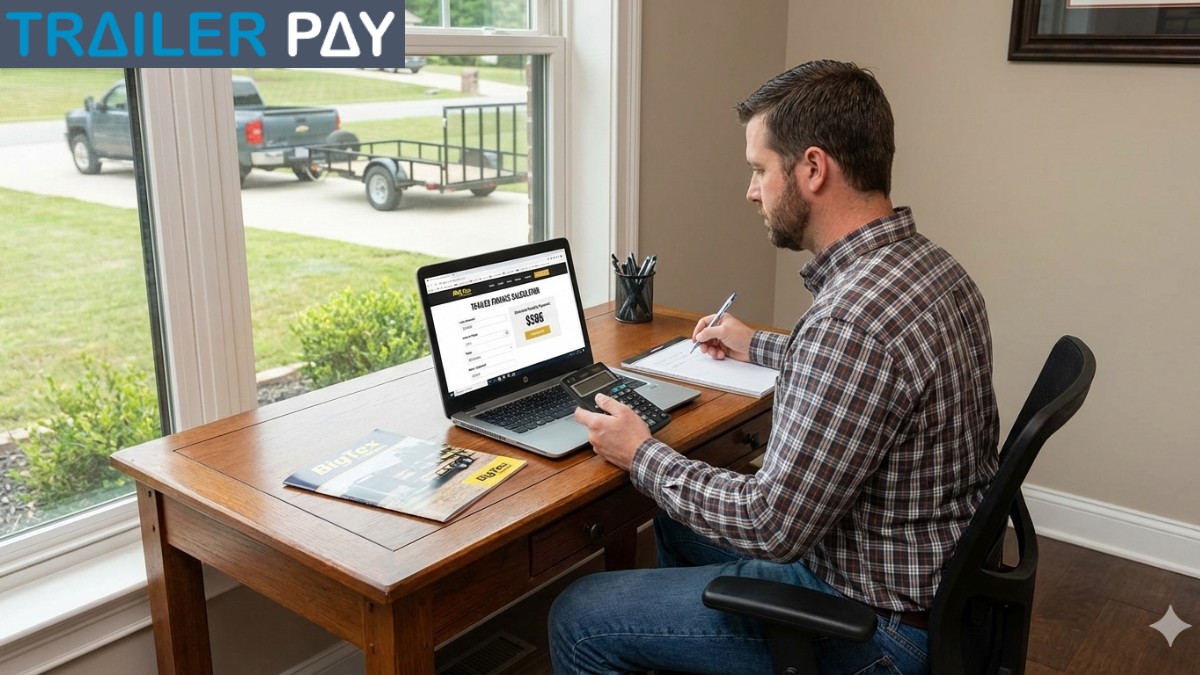
To calculate your DTI, add up all your monthly debt payments—including rent or mortgage, car loans, personal loans, credit card minimum payments, and any other ongoing financial obligations. Divide this total by your gross monthly income (before tax), then multiply by 100 to get a percentage.
For example, if your gross monthly income is $6,000 and your total debt payments equal $1,500, your DTI is 25%. Financial experts generally recommend keeping your total DTI below 30-35% to maintain healthy financial flexibility. If you're already at 30%, adding a substantial new payment might stretch your budget uncomfortably.
Before exploring payment plan options, calculate how a potential trailer payment would affect your DTI. If adding $200 per month to your obligations would push your ratio above 35%, you might consider a smaller deposit, longer payment term, or less expensive trailer option to keep payments manageable.
Step 4: Identify Your Surplus Income
Once you've mapped your income, expenses, and existing debt obligations, the remaining amount represents your surplus—the funds available for new financial commitments or savings. This figure tells you concretely what you can afford to allocate toward trailer payments.
Create a simple list of your monthly expenses across all categories: housing, utilities, groceries, transportation, insurance, existing debt payments, entertainment, subscriptions, and any other regular outflows. Subtract this total from your net income. The ASIC MoneySmart Budget Planner (moneysmart.gov.au/budgeting/budget-planner) provides a helpful tool for tracking exactly where your money goes.
Your surplus income should comfortably exceed your potential trailer payment amount, leaving a buffer for unexpected expenses. Financial advisors typically recommend that any new payment commitment should be no more than 50-70% of your available surplus, ensuring you maintain an emergency cushion. If your surplus is $400 monthly, a trailer payment of $200-$280 leaves room for the unexpected.
Remember that owning a trailer involves costs beyond the payment plan itself. Registration, insurance, maintenance, and potential repairs should factor into your calculations. When assessing what to know before applying, consider the total cost of ownership rather than just the monthly payment.
Step 5: Use a Trailer Finance Calculator
Before committing to any payment plan, use a financing calculator to estimate your actual monthly payments based on the trailer price, deposit amount, and payment term. This practical step transforms abstract affordability concepts into concrete numbers you can work with.
Trailer Pay's loan calculator guide explains how to use these tools effectively. By inputting different variables—adjusting the deposit amount, changing the payment term, or considering different trailer options—you can find a payment structure that fits your calculated budget.
Experiment with different scenarios to understand your options. A larger deposit reduces monthly payments but requires more upfront capital. Longer payment terms spread costs over time, making individual payments smaller but potentially increasing total cost. Understanding these short-term vs long-term trade-offs helps you select the arrangement that best matches your financial situation.
Compare your calculator results against the surplus income you identified earlier. If the estimated payment falls comfortably within your affordable range, you're on solid ground to proceed. If not, consider adjusting your approach—perhaps looking at different trailer types or saving for a larger deposit before committing.
Step 6: Factor in Business Considerations
For business owners and tradies, trailer affordability calculations involve additional factors beyond personal budgeting. A work trailer generates value by enabling you to carry out jobs, transport materials, or expand your service offerings, meaning the payment might be offset by increased earning capacity.

Consider whether the trailer will directly contribute to revenue generation. A landscaper purchasing a trailer to transport equipment to more job sites can often justify the expense through additional income the trailer enables. This business case analysis differs from purchasing a trailer purely for personal use, where no offsetting income exists.
Australian businesses may also benefit from tax advantages when financing work equipment. The ATO allows deductions for work-related vehicle and equipment expenses, which can effectively reduce the net cost of your trailer payment plan. Consult with a tax professional to understand how these benefits might apply to your specific situation.
Business owners should also consider cash flow timing. If your payment plan aligns with your invoice cycles or seasonal patterns, managing payments becomes more straightforward. Some businesses find that purchasing during slower periods allows them to be fully equipped when busy season arrives.
Step 7: Assess Your Financial Safety Net
Responsible borrowing means maintaining emergency reserves even while taking on new payment obligations. Before committing to a trailer payment plan, evaluate whether you have sufficient savings to handle unexpected expenses without missing payments.
Financial experts recommend maintaining an emergency fund covering 3-6 months of essential expenses. If your emergency fund is insufficient, building it up before or alongside your trailer purchase reduces financial risk. Missing payments due to unexpected expenses can create stress and potentially affect your credit standing.
Consider scenarios that could affect your ability to make payments: job loss, reduced hours, unexpected medical expenses, or major home or vehicle repairs. If your financial situation would become precarious with any of these events, you might benefit from saving a larger deposit or building more financial buffer before proceeding with a trailer purchase.
This doesn't mean you need perfect financial circumstances to purchase a trailer. Rather, it means honestly assessing your risk tolerance and ensuring you're not overextending. Trailer Pay's wide selection includes options at various price points, making it possible to find a trailer that meets your needs without straining your budget.
Putting It All Together: A Practical Example
Consider Sarah, a self-employed electrician earning an average net income of $5,500 monthly. Her current expenses total $4,200, including $1,800 for housing, $600 for her work van loan, $400 for utilities and insurance, $800 for groceries and fuel, and $600 for business costs and discretionary spending.
Sarah's monthly surplus is $1,300. Her current DTI ratio sits at approximately 15%, well below the recommended maximum. She's interested in a tradesman trailer priced around $5,000 with a payment plan of approximately $180 monthly over 30 months.
Adding this payment would bring her total debt obligations to around $780 monthly, keeping her DTI comfortably under 20%. The $180 payment represents only 14% of her surplus income, leaving substantial buffer for unexpected expenses and savings. Based on these calculations, Sarah can afford the trailer payment plan with minimal financial strain.
When to Reconsider or Wait
Sometimes the honest answer to "can I afford this?" is "not right now." Recognising when to delay a purchase demonstrates financial maturity and protects your long-term stability.
Consider waiting if your DTI would exceed 35% with the new payment, your surplus income barely covers the payment amount, you have no emergency savings, your income has recently become unstable, or you're already struggling to meet existing obligations. These situations don't permanently disqualify you from trailer ownership—they simply suggest that timing adjustments or financial preparation would benefit your purchase.
If affordability is tight, explore whether a smaller trailer option might serve your needs, or focus on building savings for a larger deposit that reduces monthly payments. You might also consider the pros and cons of payment plans versus saving for an outright purchase.
Frequently Asked Questions
What percentage of my income should go toward a trailer payment? Your trailer payment should ideally fall within 5-10% of your net monthly income for comfortable affordability. This ensures the payment doesn't crowd out other financial obligations or emergency savings capacity. Higher percentages may be acceptable if the trailer directly generates business income.
How do I calculate affordability if my income varies monthly? Use your lowest monthly income from the past year as your baseline for affordability calculations. This conservative approach ensures you can maintain payments during slower periods, which is particularly important for seasonal workers and self-employed individuals.
Should I consider existing payment plans when calculating affordability? Absolutely. All existing debt obligations—including car loans, mortgages, credit cards, and other payment plans—must factor into your debt-to-income ratio. If you're managing multiple payment plans, ensure the combined total remains within healthy limits.
What's the minimum deposit required for a trailer payment plan? Trailer Pay requires a $200 non-refundable deposit to secure your trailer purchase. However, providing a larger deposit reduces your financed amount and monthly payments, potentially improving affordability if you're working with a tight budget.
How does payment term length affect affordability? Longer payment terms reduce monthly payment amounts, making them more affordable month-to-month. However, longer terms typically mean paying more over the total life of the plan. Balance immediate affordability against total cost when selecting your term.
Can I use a trailer payment calculator before applying? Yes, and you should. Using a financing calculator before applying helps you understand exactly what payments to expect. This allows you to verify affordability against your budget before committing to any agreement.
What if I have bad credit but can afford the payments? Payment plan approval depends on various factors, and some providers offer options for those with less-than-perfect credit. If you can demonstrate affordability through stable income and manageable existing debt, options may still be available.
Should I include trailer running costs in my affordability calculation? Yes. Beyond the payment plan itself, factor in registration, insurance, maintenance, and potential repairs. A complete affordability assessment considers total ownership costs, not just monthly payments.
How do business use and personal use affect affordability differently? Business-use trailers may generate income that offsets payment costs and could qualify for tax deductions. Personal-use trailers provide lifestyle value but don't produce offsetting income, meaning affordability depends entirely on existing surplus.
What documents help prove I can afford a payment plan? Bank statements showing consistent income, pay slips, tax returns, and records of existing expenses help demonstrate affordability. Having these essential documents ready streamlines the application process and supports your case for approval.
Conclusion
Calculating whether you can afford a trailer payment plan requires honest assessment of your income, expenses, existing debts, and financial goals. By applying structured approaches like the 50/30/20 budgeting framework, calculating your debt-to-income ratio, and using financing calculators, you gain clarity on what payment amounts fit comfortably within your budget.
Remember that affordability isn't just about whether you can make payments—it's about whether those payments allow you to maintain financial stability, build savings, and handle unexpected expenses. A trailer that strains your budget creates stress, while one that fits comfortably enhances your capability without compromising your financial health.
Apply now to explore trailer payment options that match your budget and needs.